Last updated November 22, 2026
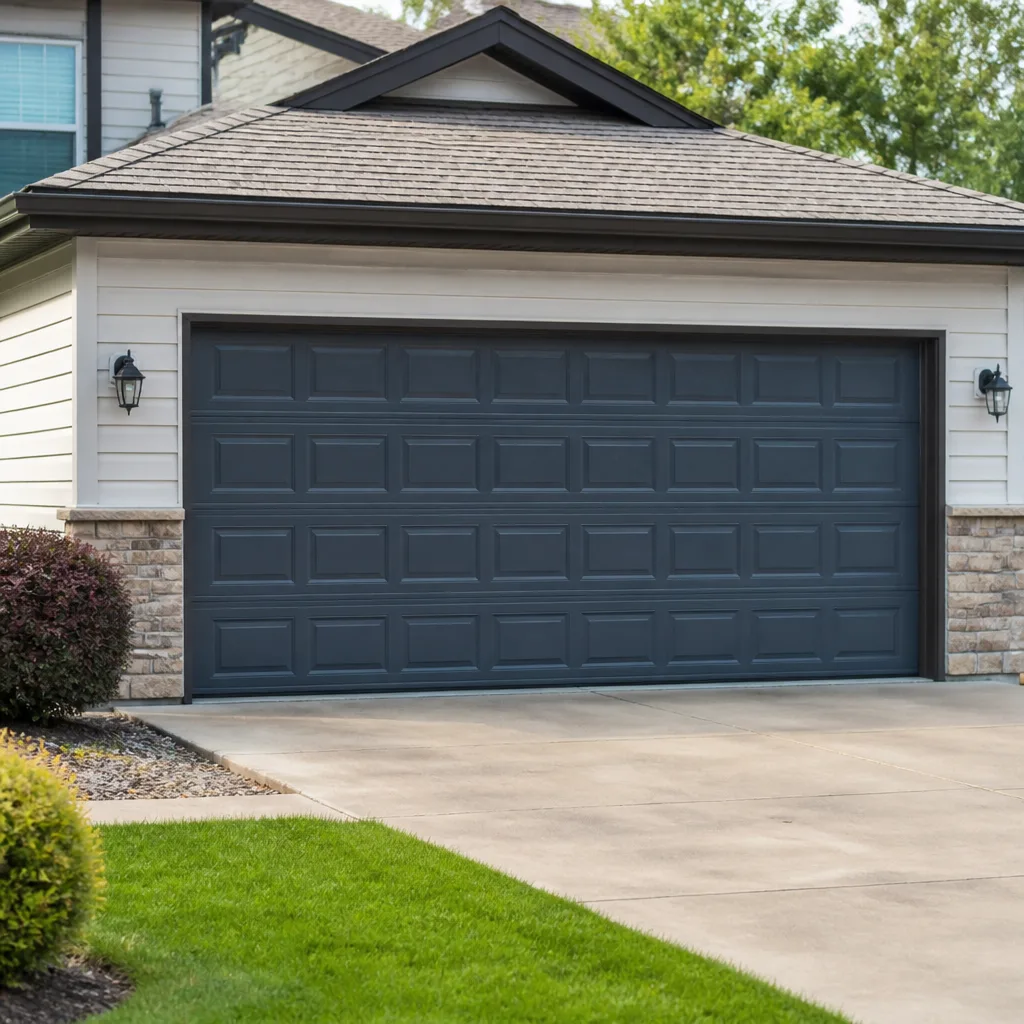 Raised-panel steel
 Carriage house
 Modern flush
 Full-view glass
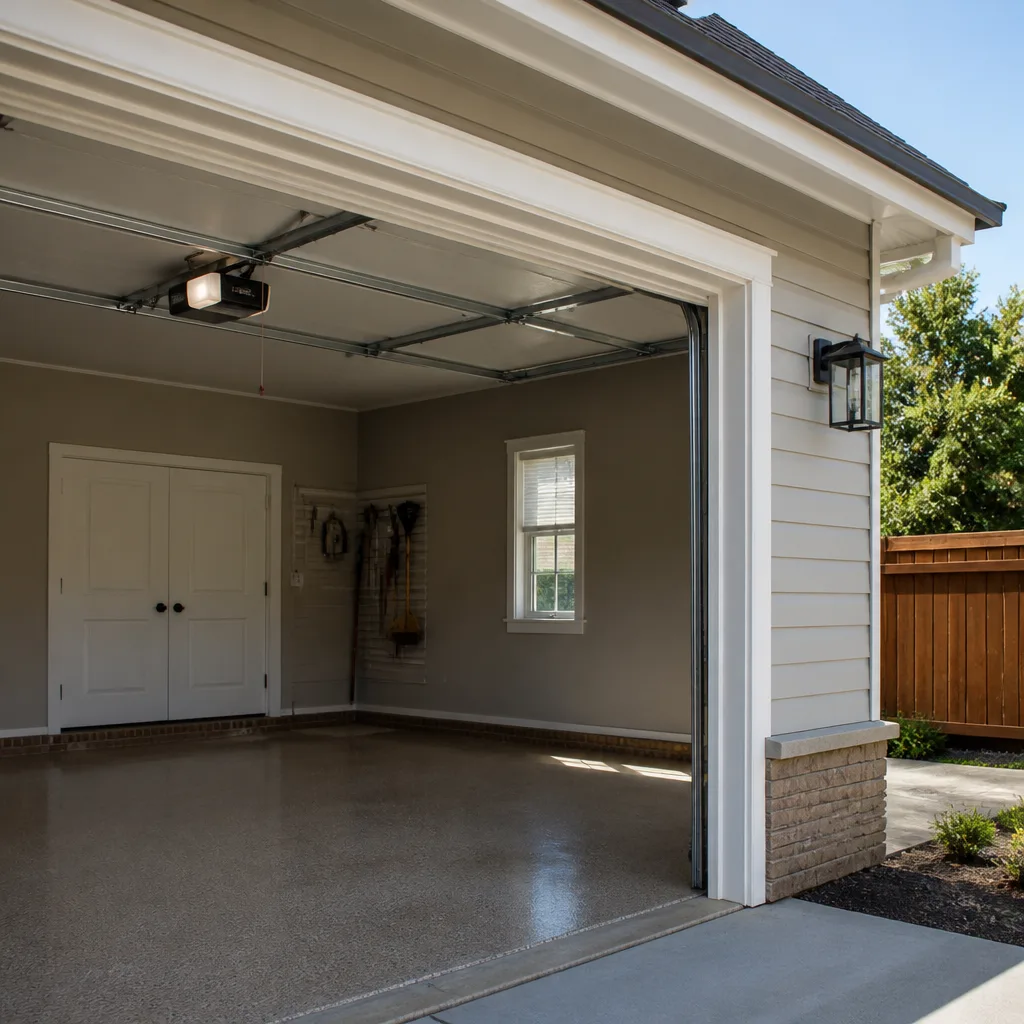 LiftMaster openers
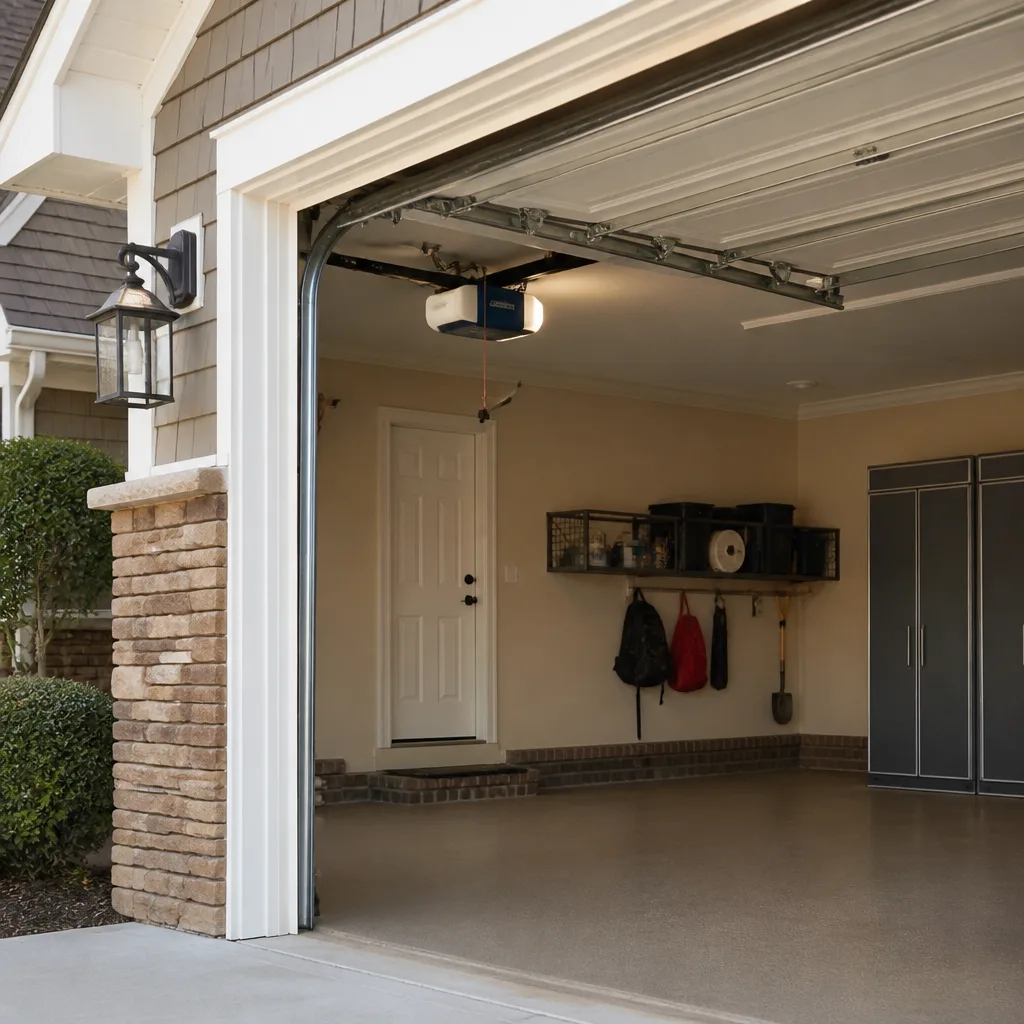 Chamberlain openers
Full 25-point door and opener safety check with every visit - springs, cables, rollers, tracks, and your LiftMaster or Chamberlain opener included
You get a price before we start. It does not change when the pro arrives.
Get your free estimateDIY vs Professional Garage Door: The Portsmouth Homeowner’s Decision Guide
Most garage door advice treats DIY as one single decision: either you’re a hands-on homeowner or you call a pro. That framing is wrong, and it’s the reason people get hurt. A garage door is a stack of very different components bolted together, and the risk of touching each one ranges from “go ahead” to “absolutely not, no matter how handy you are.” The dividing line isn’t skill or confidence or how many YouTube videos you’ve watched. It’s stored mechanical energy. This guide draws that line component by component for Portsmouth homeowners, from the tasks worth doing yourself to the ones that should end with a phone call, plus the local conditions around Portsmouth that can make a garage door behave in ways it shouldn’t.
Quick Answer
You can safely handle weatherstripping, photo-eye alignment, remote reprogramming, and lubricating rollers and hinges yourself. You should never touch torsion springs, extension springs, bottom brackets, or cable drums, because these parts hold stored energy that can cause serious injury the moment tension is released without the right tools and training. Everything else falls in between, and the fastest way to sort it out is to describe the symptom accurately and get a free estimate in Portsmouth from a technician who works on the door you already have.
Styles & brands we work with
- Raised-panel steel
- Carriage house
- Modern flush
- Full-view glass
- LiftMaster openers
- Chamberlain openers
Table of Contents
- Why This Isn’t Really a Money Question
- The Hard No-DIY List: Parts That Store Energy
- The DIY Tasks You Can Genuinely Handle
- Cost vs Risk: Doing the Math Honestly
- Portsmouth-Specific DIY Traps
- How to Describe a Problem So It Gets Fixed in One Visit
- Why Brand Familiarity Changes the DIY Equation
- Common Mistakes to Avoid
Why This Isn’t Really a Money Question
Homeowners usually frame the DIY decision as a budget question. Can I save a few hundred dollars by handling this myself? That’s a reasonable instinct for plenty of home repairs, and for a good chunk of garage door work it’s the right call. But for the high-energy components, the money question is the wrong first question, because the downside isn’t a bigger repair bill. It’s your hand.
A torsion spring on a standard residential door is under enough tension to lift the full weight of the door, often a couple hundred pounds, and it holds that energy every hour of every day whether the door is up, down, or halfway. When that stored energy is released suddenly, it releases through whatever is near it: the winding cone, the bar, the bracket, your wrist. This isn’t a liability disclaimer written by lawyers. It’s how a spring works. Any part designed to counterbalance the weight of a door has to be under load to do its job.
That’s why professional technicians use dedicated winding bars, not screwdrivers, not ratchets, not whatever fits in the hole. A proper winding bar is made of hardened steel sized exactly to the winding cone, and the technician keeps a firm grip through the full wind because letting go mid-wind is the dangerous part. Improvised tools slip, bend, or snap out of the cone under load. When they do, the bar becomes a projectile. In our experience, most garage door injuries reported by homeowners come from exactly this scenario: someone reasonably capable, using the wrong tool, on a component that punishes the wrong tool.
The reason to raise this up front is that the DIY decision for a garage door in Portsmouth should be made per component, not per person. A homeowner who’s comfortable wiring a light fixture and building a deck should still call for spring work. A homeowner who’s never held a wrench can still replace weatherstripping without fear. Sorting your task into the right bucket takes about ten seconds once you know the buckets.
The Hard No-DIY List: Parts That Store Energy
The parts on this list all share one trait: they carry stored mechanical energy, or they anchor a part that does. Touching any of them without training and the correct tools is the single most common way homeowners get hurt on a garage door, and it’s why garage door spring repair is treated as its own specialty rather than a routine repair. If the component you’re considering is on this list, stop and call.
- Torsion springs. Mounted on a shaft above the door, these are wound tight at installation and hold the door’s weight through torsion. Replacing one means unwinding the old spring under tension and winding the new one to a specific count. Without a winding bar and the experience to keep control through the wind, the release is sudden and can strike your hands, arms, or face.
- Extension springs. Mounted along the horizontal tracks, these stretch as the door closes. They’re under less tension than torsion springs but fail violently when they let go, and older ones without safety cables can whip toward whatever’s in their path. Replacing one safely means knowing how to release the tension first and installing new safety containment as part of the job.
- Bottom brackets. These anchor the lift cables at the bottom corners of the door, and they’re under constant tension from the cables. Loosening one without first releasing cable tension can cause the bracket and cable to move fast. This is one of the most underestimated hazards on a garage door, because the bracket itself looks like a simple piece of hardware.
- Cable drums and lift cables. The cables run from the bottom brackets up to drums at the ends of the torsion shaft. Cables under tension can cut through a glove and a hand if they slip off a drum. Replacing cables means releasing spring tension, re-spooling the drums correctly, and re-tensioning. There’s no safe shortcut.
- The torsion shaft and its center bearing plate. These connect the whole spring-and-cable system. Removing the shaft means releasing all spring tension first. It’s a coordination job, not a hardware job.
None of this is meant to insult your competence. It’s meant to save you a bad afternoon. The parts above are the reason spring replacement is treated as a named, dedicated service by professionals rather than lumped in with general repair, and the reason technicians who handle it are specifically equipped for it.
The DIY Tasks You Can Genuinely Handle
Here’s the other half of the story: plenty of garage door maintenance is safe, satisfying, and worth doing yourself. None of these tasks require releasing stored energy or getting near a spring, a bracket, or a cable. If you’ve got basic tools and a few minutes, these are yours.
- Replacing weatherstripping. The rubber seal along the bottom of the door keeps out rain, drafts, and insects. It slides out of a channel or pulls off a track depending on the door, and replacement is a straightforward chore. Buy the correct profile for your door, slide or press the new seal in, and check that the door still seats evenly when closed.
- Aligning photo-eyes. The two small sensors near the bottom of the tracks on either side of the opening are what stop the door from closing on a person or pet. If the door reverses immediately after starting to close, the photo-eyes are usually the culprit. Wipe them clean, check that each one is pointed at the other, and confirm the indicator light on each sensor is steady rather than blinking.
- Reprogramming remotes and keypads. Whether your opener is a LiftMaster, a Chamberlain, or a Genie, the pairing process is documented in the manual and usually involves pressing a learn button on the motor head and then a button on the remote. Losing a remote or changing a keypad code is a genuine DIY task.
- Lubricating rollers, hinges, and the torsion shaft bearings. A garage door that squeaks or groans usually needs lubrication, not repair. Use a garage-door-specific lubricant on the hinges, roller stems, and bearing plates. Skip the tracks themselves: they’re meant to stay dry so the rollers can roll rather than slide.
- Clearing the tracks of debris. Leaves, grit, and small objects in the tracks make the door bind. A rag and a stiff brush handle most of it. Don’t use grease on the tracks to “make them smoother” – that attracts dirt and makes the problem worse.
- Checking and tightening visible bolts on hinges and brackets (not the bottom brackets). Vibration loosens hardware over time. A socket wrench on the hinge bolts and the roller brackets is a safe way to quiet a rattling door.
- Testing the safety reverse. Put a roll of paper towels under the door and let it close. If the door doesn’t reverse when it touches the roll, the opener needs adjustment. That test is free, takes a minute, and tells you whether to call.
Cost vs Risk: Doing the Math Honestly
Homeowners often assume that doing it themselves saves money. For a torsion spring, that math doesn’t hold up once you account for what can go wrong. Consider the real comparison.
- DIY spring replacement: a pair of springs and a set of winding bars might run a little over a hundred dollars. The winding process itself is where things go sideways: an incorrect wind count leaves the door misbalanced, a slipped bar can cause injury, and a botched install can put stress on the opener, tracks, and hinges that leads to secondary repairs.
- Professional spring replacement: a service call to replace a pair of springs is typically a few hundred dollars, includes the correct springs for the door’s weight and height, includes the wind to the right count, and includes a balance check and a safety inspection while the technician is there. The written estimate is the price, agreed before any work starts.
- Botched repair: a door left out of balance wears out the opener faster, bends the tracks, and can damage the panels as the door racks in the opening. Fixing a racked door often costs more than the original spring repair would have.
That last point matters most. The real risk of a DIY spring job isn’t only the injury. It’s that a door that isn’t balanced correctly feels fine for a week and then starts eating the opener. That’s how a small savings turns into a bigger repair. Professional technicians check balance as part of the job because the door hasn’t actually been fixed until it opens and closes with even weight on both sides.
Where the math flips the other way: for weatherstripping, photo-eyes, lubricant, and remote programming, the DIY approach is genuinely the cheaper and faster path. Buying a $15 seal and spending twenty minutes on it beats scheduling a service call for the same task. The guide’s point isn’t “never DIY,” it’s “DIY the cheap stuff and call for the dangerous stuff.”
Portsmouth-Specific DIY Traps
Portsmouth has two conditions that quietly make some garage doors more dangerous to work on than they look. Neither one is visible at a glance, and both are easy to miss if you’re judging by appearance. This is the part of the guide you won’t find on most national garage door sites.
Hardware that looks intact but isn’t
Humidity in this part of Virginia works on steel hardware year over year. Hinges, roller stems, brackets, and the fasteners that hold them can develop surface corrosion that reads as cosmetic until the part is under load. A hinge that looks solid on a visual inspection can be significantly weakened at the metal’s core, and when it’s asked to carry the door’s movement, it can fail in a way that’s hard to predict. This is why “it looks fine” is not a safe way to decide whether to put a wrench on a part of a garage door in Portsmouth. If a fastener looks rusty or a hinge feels crunchy when you move it by hand, treat it as compromised and let someone inspect it.
Tracks that look straight but aren’t
Wood-framed garages in Portsmouth take on humidity swings through the year, and the wood framing around the garage opening can move subtly as seasons change. A track that mounts to that framing can develop a slight bow or twist that’s invisible to the eye but enough to make the door bind. Homeowners then try to fix the bind by adjusting rollers, replacing hinges, or tightening brackets, which usually makes it worse. When the door is running roughly, don’t assume the problem is the part you can see. Ask a technician to check whether the tracks are plumb and parallel, which takes a level and a careful eye.
Doors that have been sitting
Plenty of Portsmouth homes have garages that aren’t used daily, and a door that’s been closed for months is worth a full check before you trust it. Springs settle, hinges stiffen, and a door that was balanced when it was last used may no longer be. If you’re bringing a garage back into service, a professional inspection is cheap relative to a door that fails halfway up.
These conditions don’t mean every Portsmouth garage is a hazard. They mean the visual inspection that works in a dry climate is less reliable here, and a professional’s trained eye is worth the call when something feels off.
How to Describe a Problem So It Gets Fixed in One Visit
Calling about a garage door problem is a specific skill, and the quality of the description makes a real difference in whether the visit ends with a working door or a return trip. When you can name the symptom, when it happens, and what you can see, the technician can load the right parts and finish the job in one stop. Here’s how to describe what’s going on.
- Say what the door is doing, not what you think is broken. “The door goes up about a foot and then stops and reverses” gives a technician a lot. “The opener is broken” gives almost nothing, because the same symptom can come from a spring, a track bind, a sensor, or the logic board.
- Note whether the door is stuck open, stuck closed, or moving but misbehaving. Stuck-open means your home is exposed and the repair is urgent. Stuck-closed means you may not be able to get a car out. The urgency changes the response, so say it clearly.
- Mention what the opener does when you press the button. Does it click but not move? Does the light flash? Does it hum and stop? Does it run for a second and reverse? Each pattern points to a different part of the system.
- Check the photo-eyes before you call and tell the technician what you saw. Are the indicator lights on both sensors steady? Blinking? Dark? That one detail can save time on the visit.
- Have the door’s brand and model handy. A technician who works on Raynor, LiftMaster, Chamberlain, and Genie equipment regularly can often identify the model from the door’s look, but knowing it upfront helps with parts and with understanding whether a known quirk applies.
- Say whether the door is balanced by hand. If you can lift the door by hand from the closed position, and it stays where you put it when you let go, it’s roughly balanced. If it drops or fights you, the springs are the likely culprit and the technician will arrive ready for spring work.
- Be honest about what you’ve tried. If you’ve already adjusted the travel limits, replaced a remote, or tightened a hinge, say so. Nothing extends a visit faster than discovering mid-repair that the settings have been changed.
The more accurate the description, the more likely the tech arrives with the right parts and leaves with the issue resolved. That’s the reason garage door opener repair is often a single-visit job when the caller can describe the symptom clearly.
Why Brand Familiarity Changes the DIY Equation
Another piece of the DIY decision that homeowners often miss: not all brands behave the same way, and the brand on your door can influence which repairs are safe to do yourself and which need a specialist. A remote programming procedure that works seamlessly on a Chamberlain can be completely different on a Genie. A Raynor door’s spring hardware might take one style of replacement spring, while a Clopay on the same block takes another. If the guide you found online covers a different brand than the door you have, don’t assume the steps apply.
This is why brand familiarity matters. Technicians who work on LiftMaster, Chamberlain, Genie, Clopay, Amarr, Wayne Dalton, Craftsman, and Raynor equipment regularly already know the quirks: how the tension adjusts, what springs the door takes, how the opener’s safety reverse is configured, and where the weak point tends to be. That familiarity is the difference between a one-visit fix and a call-back. It’s also why having a service you can reach on the same door you already own is more useful than replacing the door because a technician didn’t know the brand. Brand-agnostic repair is the whole point: the goal is fixing the system in place, not talking you into a new one.
For homeowners deciding whether a task is DIY-appropriate, the brand question is a simple filter. Remote programming and photo-eye alignment on any brand are usually DIY. Anything involving the torsion system, the drums, or the bottom brackets is a call regardless of brand, because the danger comes from the physics, not the label on the door.
Common Mistakes to Avoid
- Using a screwdriver in place of a winding bar. A screwdriver doesn’t fit the winding cone correctly, so it slips under load. The slip is the injury. If you don’t own a proper winding bar, you don’t own the right tool for a spring job, and the tell is right there.
- Trusting “it looks fine” as a safety check. In Portsmouth, corrosion and humidity can hide weakness inside a hinge or bracket. Visual inspection is not a substitute for testing hardware under load, and testing hardware under load is exactly what you shouldn’t be doing on the high-energy parts.
- Greasing the tracks. It feels like it should help, but grease attracts grit and turns the tracks into glue. Use a proper garage door lubricant on hinges and rollers and leave the tracks dry.
- Adjusting the opener’s travel limits to compensate for a door that isn’t balanced. If the door needs a nudge to close, the problem is usually the door, not the opener. Adjusting the limits turns a small repair into a bigger one because the opener keeps pushing against a door that can’t travel freely.
- Ignoring a single broken extension spring on a pair. Replacing only the broken spring leaves the door out of balance and wears the remaining spring faster. If you’re going to replace, replace the pair, and let a technician do it.
- Trying to force the door up or down when it’s stuck. A door that won’t move is telling you something. Forcing it can bend panels, bend tracks, and turn a small repair into a door replacement.
- Calling without describing the symptom, then being surprised by a return visit. If a tech shows up without the right parts because the call sounded like “the door doesn’t work,” the fix happens the second time. Say what it’s doing, and the first visit can finish the job.
See the difference
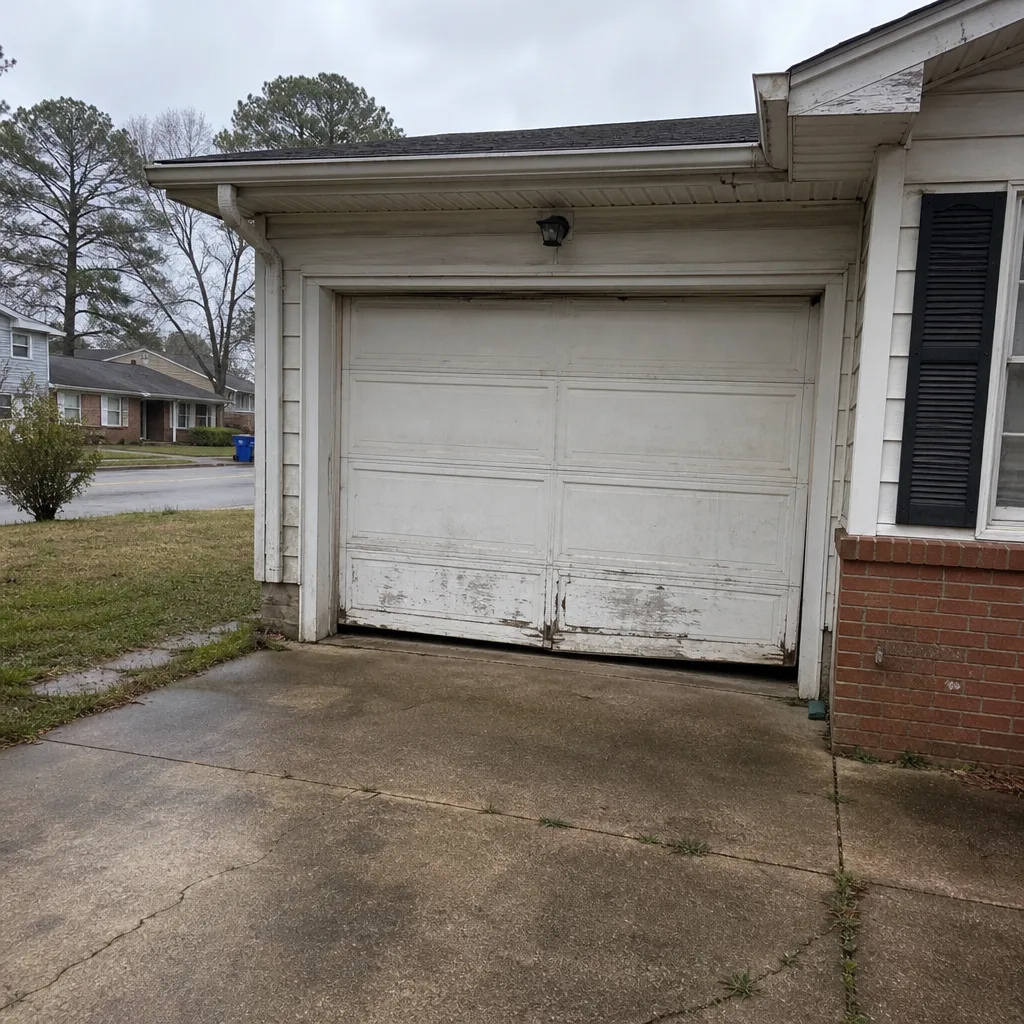 Before
 After
 Before
 After
 Before
 After
When to Call a Professional
Some situations are clear-cut: any work on torsion springs, extension springs, bottom brackets, or cables is professional work. A door that’s stuck open in bad weather or stuck closed with a car inside is an emergency and needs a fast response, which is why emergency garage door service is treated as a core offering here rather than an upsell. A door that’s out of balance, running rough, or making a new noise needs an inspection before it gets worse. If you’re not sure whether a task is safe, the answer is that it isn’t. Portsmouth Garage Door Repair Pros offers free estimates in Portsmouth – call (855) 937-1767 and describe what the door is doing, and we’ll tell you whether it’s a job for a technician or something you can handle yourself.
Frequently Asked Questions
No. Garage door springs store enough energy to cause serious injury, and the winding process requires specialized winding bars plus the control that comes from experience. A spring that’s been wound wrong or released unexpectedly can strike a hand, arm, or face. This isn’t a liability concern; it’s how stored energy works. Call a professional for spring work, including garage door repair on a door that’s already lost spring tension.
Sometimes, but it depends on the symptom. Remote programming, keypad codes, photo-eye alignment, and force-limit adjustment are reasonable DIY tasks. Anything involving the logic board, the motor, the drive gear, or the safety reverse fixture is usually better handled by a technician who works on your brand. If you’re unsure, describe the symptom and let someone help you sort it.
Professional spring replacement is typically priced per spring, with a matched pair costing roughly twice a single spring. The written estimate sets the final price, and it’s agreed before any work starts. Call (855) 937-1767 for a free estimate – the technician will check the door’s balance and the overall condition of the hardware while there.
Using an improvised tool in place of a winding bar for spring work. A screwdriver or ratchet doesn’t seat correctly in the winding cone, so it slips when the load comes on. The second most common mistake is trying to fix a binding door by adjusting the opener instead of looking at the tracks and rollers.
Usually not, because a door that’s stuck at the top is a cable or spring problem rather than an opener problem, and those are the parts to leave to a professional. If the door is stuck open and the home is exposed, treat it as an emergency and call for service rather than trying to force the door down.
We work on the door you already have. Our technicians regularly service LiftMaster, Chamberlain, Genie, Clopay, Amarr, Wayne Dalton, Craftsman, and Raynor systems, which covers the vast majority of what’s installed in Portsmouth homes. If you’re not sure about your brand, say what it looks like and we’ll tell you.
It depends on the scope and on local rules, so ask the city’s building department before you plan a full replacement. A simple panel or opener repair doesn’t usually involve a permit, but a new door or a structural change to the opening is worth confirming. Start with the city, then get a free estimate from us.
Look for a company that services multiple brands rather than a single-brand specialist, and ask upfront whether they work on your system. A technician who can service 8 of the most common garage door and opener brands is more likely to have the parts and knowledge for your door. That’s the model Portsmouth Garage Door Repair Pros works from: brand-agnostic repair, not replacement-first.
The Bottom Line
The DIY-versus-pro question for a garage door is a question of which component you’re touching, not whether you consider yourself a handy person. Weatherstripping, photo-eye alignment, remote programming, and lubrication are safe, sensible DIY work, and doing them yourself saves money. Torsion springs, extension springs, bottom brackets, and cables store enough energy that no amount of confidence makes DIY a reasonable choice, no matter how the task looks online. In Portsmouth, humidity and seasonal wood movement add another layer of uncertainty, because hardware and tracks can look fine and still misbehave under load. When in doubt, describe the symptom, ask for an estimate, and keep the dangerous parts for the people who use the right tools.
Contact
If you’ve read the guide and you’re not sure which side of the line your task falls on, call us. We’ll give you an honest answer about whether a repair is safe to try yourself or a job for a technician, and if it’s the latter, we’ll book a free estimate in Portsmouth. From opener glitches to full installation, our technicians have up to 15 years of experience and we work on the door you already have. Call (855) 937-1767 for a free estimate.
Written by the team at Portsmouth Garage Door Repair Pros.