Last updated November 22, 2026
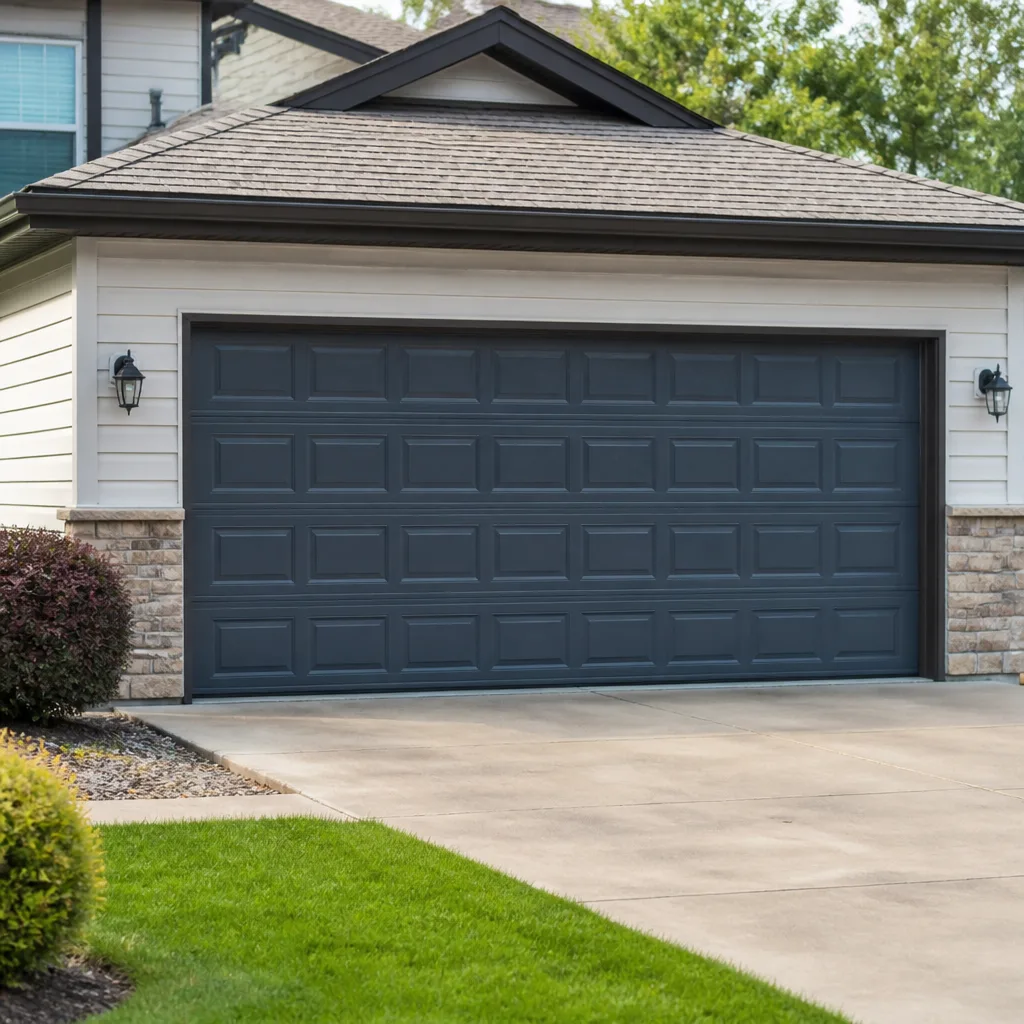 Raised-panel steel
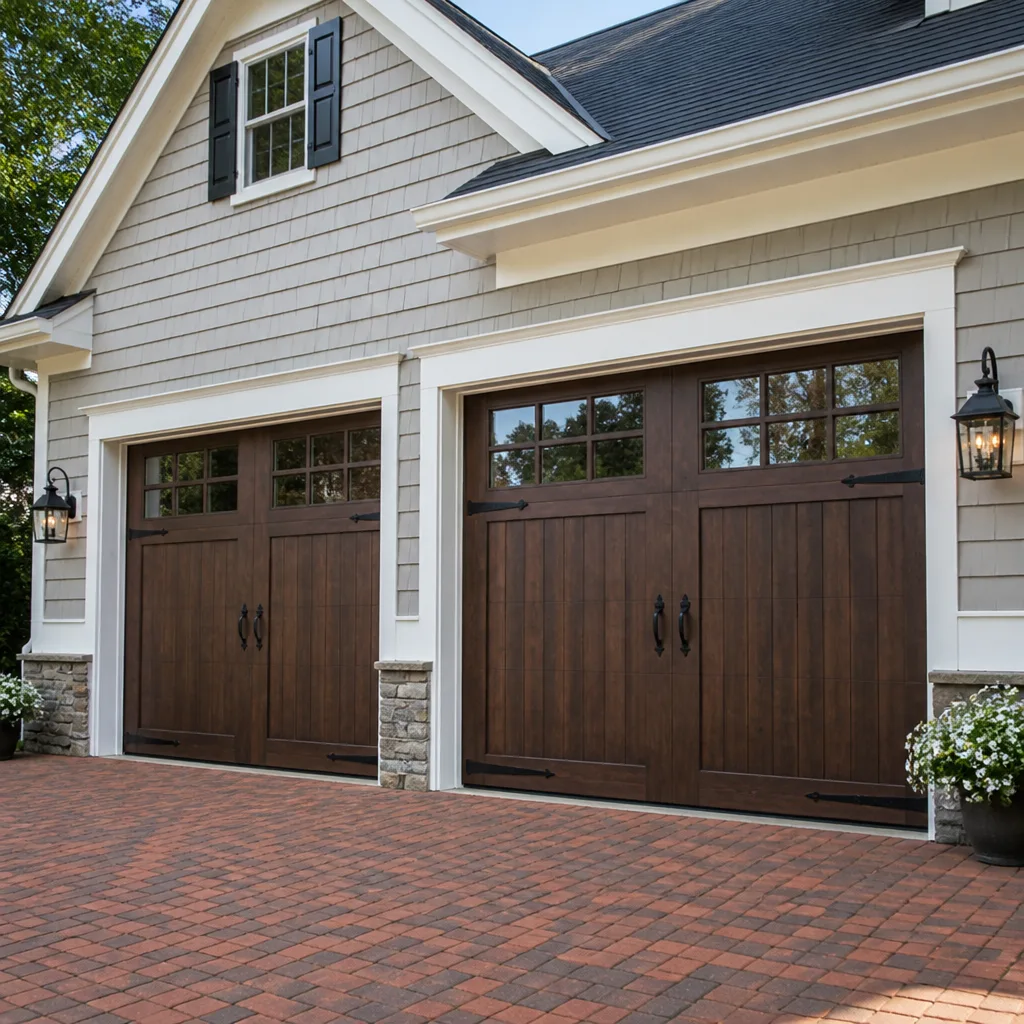 Carriage house
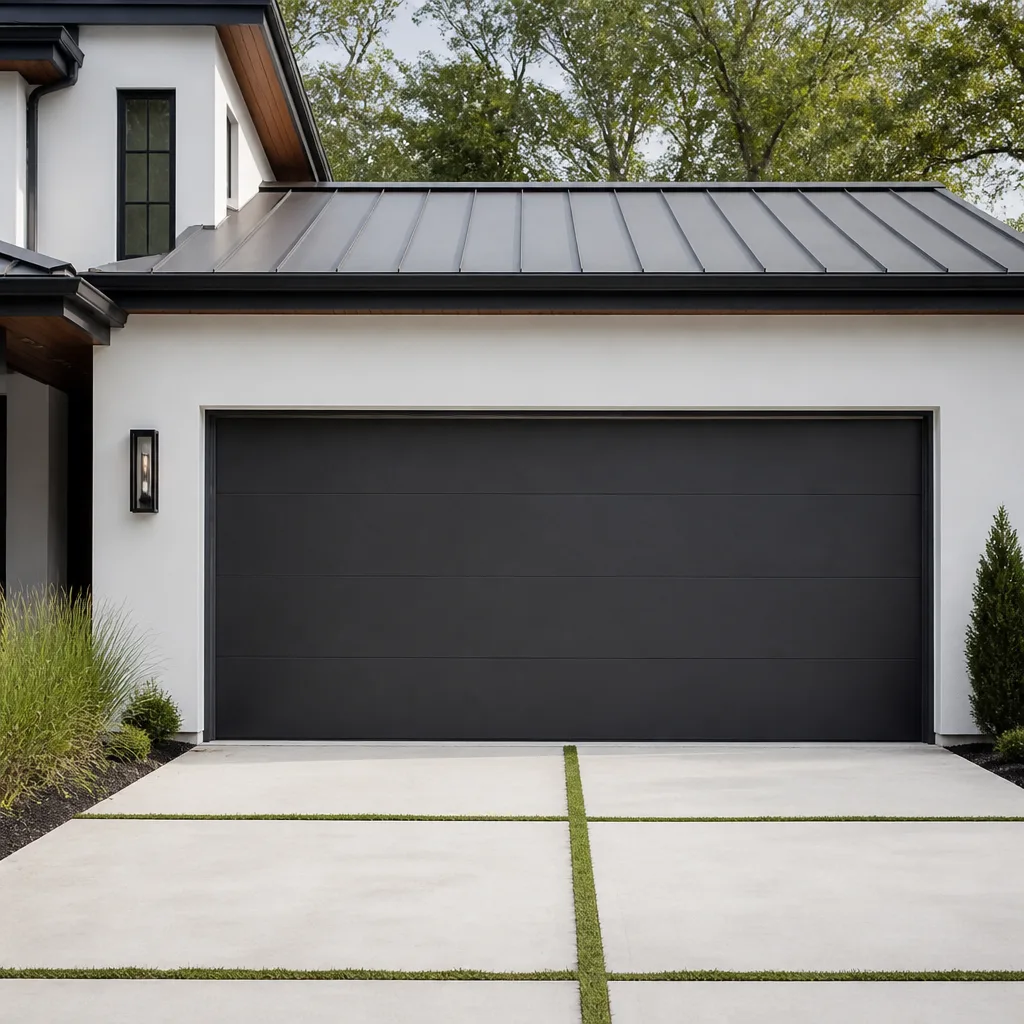 Modern flush
 Full-view glass
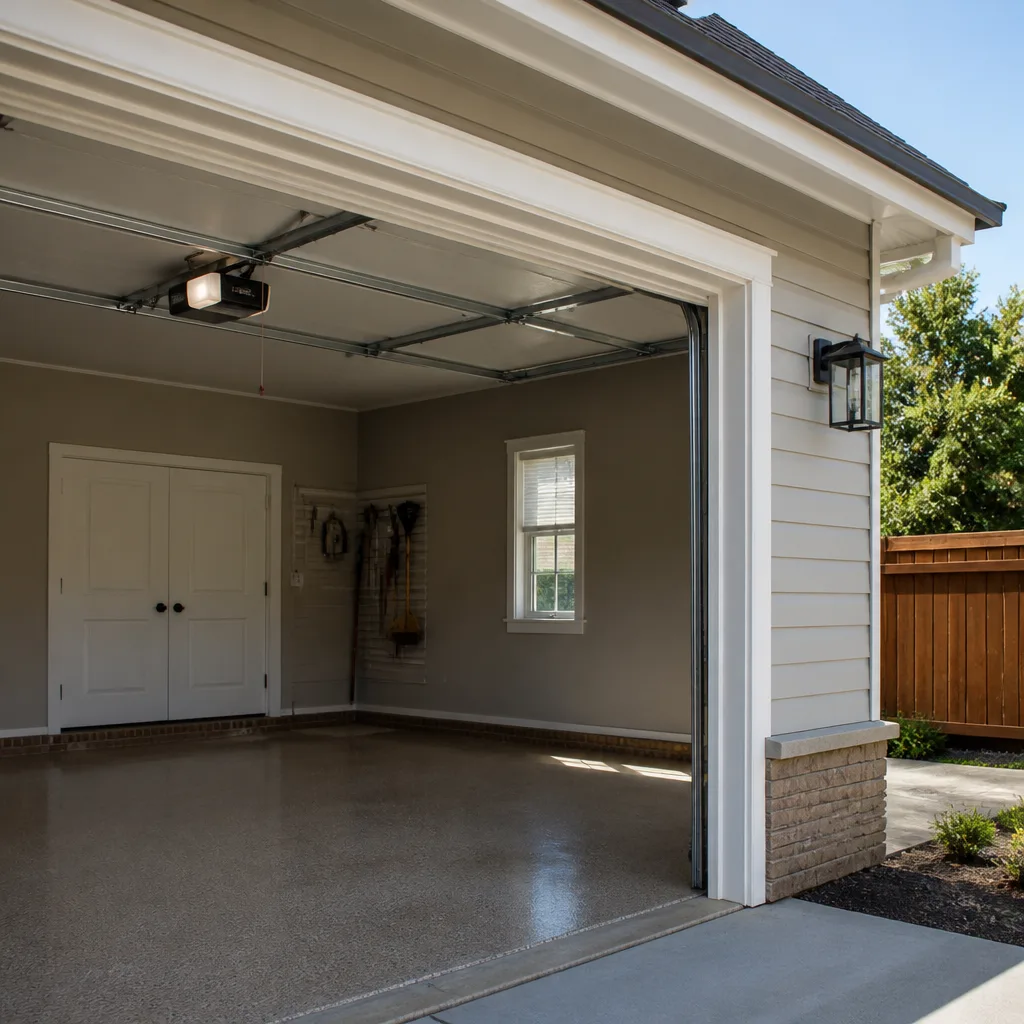 LiftMaster openers
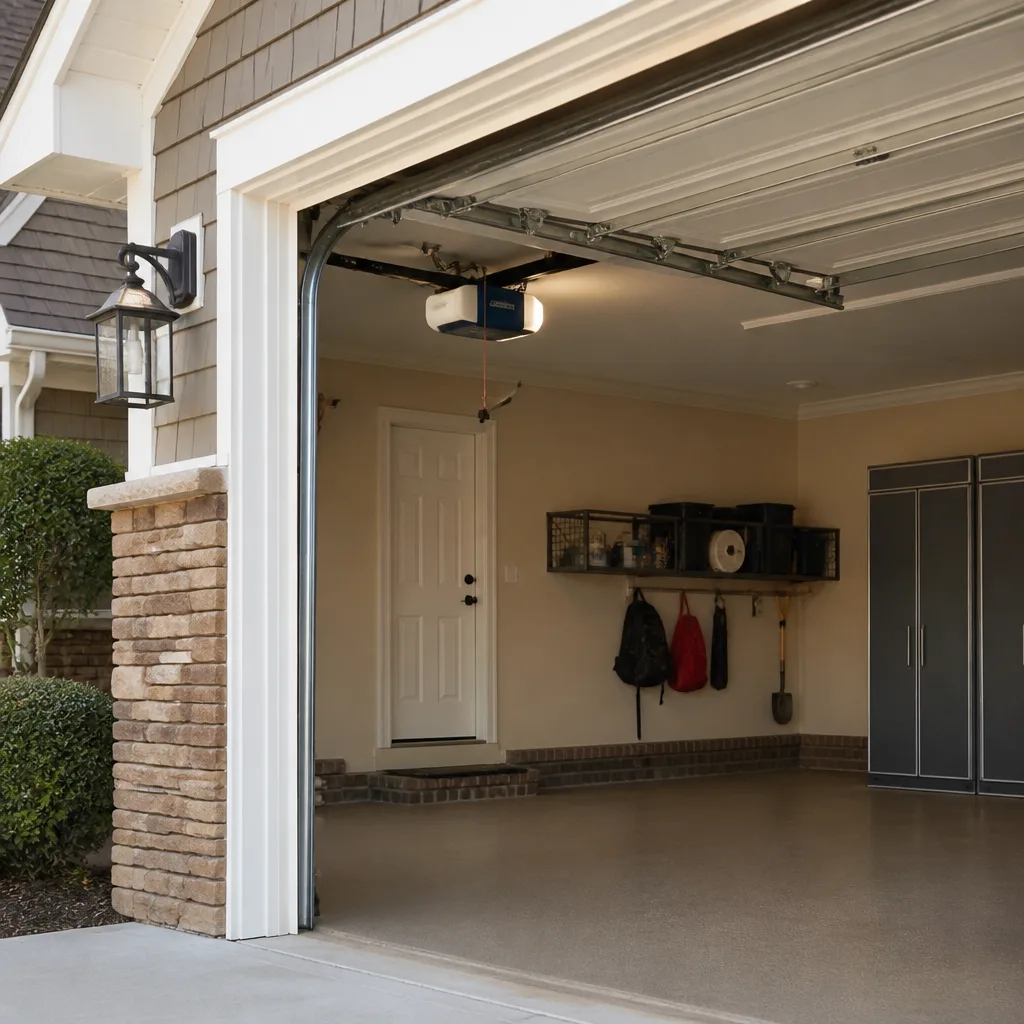 Chamberlain openers
Full 25-point door and opener safety check with every visit - springs, cables, rollers, tracks, and your LiftMaster or Chamberlain opener included
You get a price before we start. It does not change when the pro arrives.
Get your free estimateGarage Door Warning Signs: A Portsmouth Homeowner’s Reference Guide
A garage door that hesitates for two seconds before it moves is not “just getting old.” In most cases we open up, that pause means a torsion spring is under uneven tension and is weeks away from letting go, often when the door is at full extension and the spring carries the whole weight of the panels. The reason homeowners miss that signal, and the grinding, popping, and asymmetric sagging that come before a full failure, is simple: nobody ever showed them what normal looks like. A healthy door is boring. It starts together, tracks straight, and sounds like nothing much. This guide catalogs the warning signs worth acting on in Portsmouth, what each one points to mechanically, and how fast you need to respond.
Quick Answer
Garage door warning signs fall into four families: sounds (grinding, squeaking, popping, banging), visual asymmetry (sagging panels, cables off the drum, tracks pulling from the wall), opener behavior (slow response, reversing without obstruction, shrinking remote range), and spring or hardware condition (rust, white deposits, sagging seals). Any sign that involves a snapped spring, a loose cable, or a door that won’t travel evenly means stop using the door today and call a technician. Squeaks, slow openers, and worn bottom seals can usually wait for a scheduled visit within the week.
Styles & brands we work with
- Raised-panel steel
- Carriage house
- Modern flush
- Full-view glass
- LiftMaster openers
- Chamberlain openers
Table of Contents
- Sound-based diagnostics: what each noise tells you
- Visual asymmetry: spotting a cable or track failure early
- Opener behavior flags and what they indicate
- Spring warning signs and why they matter first
- Warning signs specific to Portsmouth homes
- Urgency triage: stop today vs. schedule this week
- A 10-minute monthly check any homeowner can do
Sound-Based Diagnostics: What Each Noise Tells You
Your ears are the cheapest diagnostic tool on the property. A garage door that has run clean for years has a baseline sound: a low motor hum and the soft roll of nylon rollers on the track. Learn that baseline, because any new sound sits on top of it. Here’s how we break the four common noises down by component and urgency.
Grinding
Grinding is metal on metal, and it usually means the rollers or the hinges have lost lubrication and the bearings are wearing. It can also point to a torsion spring that has lost tension and is dragging against the shaft. Grinding is a schedule-this-week sign, not a stop-today sign, but it accelerates wear fast. Left alone for months, grinding rollers chew through their stems and can seize mid-travel.
Squeaking
Squeaking is the least urgent of the four. Nylon rollers, hinges, and the bearing plates dry out, and a dry joint chirps at the same point of travel every cycle. A technician can quiet it in a single visit with the right lubricant, not the WD-40 most homeowners reach for. Grease on a garage door track attracts grit and makes the problem worse.
Popping
A sharp pop, especially one that repeats at the same point in the door’s travel, is the one to take seriously. It usually means a torsion spring has a broken coil inside, or a cable has slipped a drum and just re-seated under load. Popping is the sound that precedes spring failure most often. When we hear a customer describe it on the phone, we ask them to leave the door down until we can look at it.
Banging
Banging at the top of the travel (when the door reaches the fully open position) usually points to worn opener bushings or a loose rail. Banging at the bottom of the travel can mean a misadjusted limit switch, and the door is slamming the concrete. Both are wear items an opener visit can address. If the banging coincides with the door moving faster than normal, stop and check for a broken spring before you cycle it again.
Visual Asymmetry: Spotting a Cable or Track Failure Early
Walk out to the garage with the door closed and just look at it. The cables should be taut and evenly wound on both drums. The horizontal tracks should sit parallel to the door, not angled up or down. The vertical tracks should be plumb and firmly bolted to the wall framing. When one of those three things is off, the imbalance is already loading the other side of the door harder than it should.
Here’s the visual checklist we run on every diagnostic call, in order:
- Cables: Both should be straight and under light tension when the door is down. A cable that’s slack on one side, or frayed with a bird’s nest of broken strands poking out, is a stop-today sign. Cables are stored energy, and a frayed one can whip free if it lets go.
- Drums: The cable should be wound neatly around the drum in even coils. A cable that’s jumped the drum and is riding on the shaft instead is a failure waiting on the next cycle.
- Tracks: Look at the bolts where the horizontal track meets the wall bracket at the back end. If the bracket has pulled away from the wood or you can see daylight between the plate and the framing, the track is under load it wasn’t designed for.
- Panels: Closed door, look at the top edge. If the top panel is level and the bottom panel is not, a hinge or a roller stem has bent.
- Springs: A torsion spring should be an unbroken coil across its whole length. A visible gap in the coil, or a spring that’s noticeably tighter on one side than the other, means it’s already failed or failing.
One of the things we see on Portsmouth doors more than on doors further inland is cable tension that’s drifted unevenly after years of damp winters. The mechanism hasn’t broken, but the door is running with a slight tilt that shows in the gap between the bottom seal and the concrete. That tilt is the door speaking.
Opener Behavior Flags and What They Indicate
Openers from LiftMaster, Chamberlain, Genie, and legacy Craftsman lines fail in predictable ways. The symptom usually points to a specific part inside the drive mechanism, and knowing which one saves you an unnecessary replacement call. For deeper diagnostics on any opener brand, we handle garage door opener repair across all four lines.
Slow Response
If the opener takes a full second or two after the wall button press before the motor engages, the problem is usually one of three things: a worn drive gear in the opener head, a failing capacitor, or a remote battery that’s dying. LiftMaster and Chamberlain openers with a battery backup are good candidates for this symptom because the backup battery can mask a weak main connection. A slow opener is not urgent, but it does get worse before it gets better.
Reversing Without Obstruction
A door that goes down a few inches and reverses on its own, with nothing in the way, is tripping its safety sensors or its force limit. The safety sensors (the small lenses at the bottom corners of the track) are the most common culprit: dust, a bump that knocked one out of alignment, or sunlight hitting the receiving lens at the wrong angle. If realigning the sensors doesn’t fix it, the opener’s force travel limit has drifted, and that’s a technician call.
Reduced Remote Range
A remote that used to work from the top of the driveway and now only works from 10 feet away is telling you something. Usually it’s the remote battery first, then the opener’s antenna wire, which should hang down straight from the back of the motor housing. If the antenna is bent back against a joist or coiled up, range drops sharply. If a new battery and a straightened antenna don’t restore range, the opener’s receiver board is on its way out.
Opener Runs But Door Doesn’t Move
When the motor hums but the door stays put, the drive gear inside the opener head has stripped, or the trolley has released from the carriage. On Chamberlain and Genie units, this is often fixable by replacing the gear or the trolley, not the whole opener.
Spring Warning Signs and Why They Matter First
Torsion springs are the highest-energy component on any garage door and the most common failure point. When a spring breaks, it releases stored energy instantly, and the door becomes a dead weight of hundreds of pounds on the cables and the opener. Every technician we work with treats spring symptoms as a priority case, because catching a spring that is failing before it fails is the single most useful thing a homeowner can do. Our garage door spring repair team sees these signs on Portsmouth doors constantly.
The warning signs to know:
- Visible coil gap: A torsion spring that has an obvious gap in the coil, or shows a bright bare-metal line where the paint has flaked at one point, is already failing at that line. Coatings wear first where the metal is under the most stress.
- Door feels heavy when lifted manually: With the door disconnected from the opener (pull the release cord with the door down), the door should lift with modest effort. If you can barely lift it and the door feels like a 200-pound barbell, the springs are done or near done. Do not do this test alone, and do not attempt it on a door with a visibly broken spring.
- Door jumps or hesitates on start: That two-second hesitation mentioned at the top of this guide is the classic uneven-tension symptom. One spring is carrying more load than the other.
- Loud snap and a door that won’t move: That’s a broken spring, and it means stop. Call for emergency service.
- Surface rust on the spring wire: Rust on the spring is not cosmetic. The wire loses fatigue resistance where it corrodes, and Portsmouth’s damp fall and spring weather gives torsion springs a slow, steady moisture exposure that accelerates this. See the local section below.
A matched pair of springs is usually replaced together, since a new spring paired with an old one will simply transfer the load to the weaker one. Budget for both.
Warning Signs Specific to Portsmouth Homes
Garage doors here live in a specific environment: humid summers, wet winters, temperature swings, and a lot of older housing stock where the garage framing has been slowly moving with the seasons. The wear patterns on a Portsmouth door are not the same as the wear patterns on a door in the desert. Here’s what to look for locally.
Rust Patterns on the Springs
Look at your torsion springs. Rust that forms in random freckles along the coil is normal weathering. Rust that lines up in a stripe at one point in the coil is telling you where the metal is flexing hardest. Those stripe patterns predict failure better than freckling does. If the paint is flaking in a single band on a spring, that spring is getting ready to go.
Corroded Hardware at the Hinges and Roller Stems
Hinge plates and roller stems on Portsmouth doors tend to corrode from the inside out. The powder coat on a hinge plate holds up fine on the face but fails at the bolt holes, and the roller stem corrodes inside its bearing. When you can see rust weeping out of the roller stem, the roller is already dragging.
Bottom Seal Deterioration
Damp concrete holds moisture against the rubber bottom seal down its whole length. The seal hardens, cracks, and eventually tears off the bottom panel. You’ll see daylight under the door, and you’ll feel a draft when the garage is closed. A worn bottom seal is a low-urgency repair but a genuine comfort and utility-bill problem, and it’s one of the most common things we replace on Portsmouth doors.
Wood Framing Movement
Many Portsmouth homes have garage framing that has moved with decades of wet and dry seasons. When a jamb has rotated slightly, the vertical track bolts loosen and pull the track out of plumb. You’ll spot this by looking at the gap between the track and the jamb: it should be even from top to bottom. If the gap widens at the top or the bottom, the framing has moved and the track needs to be re-set.
Panel Warping From Humidity Swings
Wood and wood-composite panels will absorb moisture in the summer and dry in the winter. That cycle warps the panel and puts extra stress on the hinges and rollers. If your panels are looking wavy, that’s the cause. Steel panels from brands like Clopay and Amarr hold their shape better but can still show bowed top sections if the framing behind them has shifted.
Urgency Triage: Stop Today vs. Schedule This Week
The single most useful question about any warning sign is: do I stop using the door now? Here’s the triage we use with every customer.
Stop Using the Door Today (Call for Emergency Service)
- Broken spring, or a loud snap with a door that won’t move
- A cable off its drum, slack on one side, or visibly frayed
- The door is visibly asymmetric: one side is up more than the other, or you can see daylight in a diagonal across the closed door
- A horizontal track that has pulled away from the wall bracket
- The door sounds like it’s going to fall while it’s moving
- The opener grinds and the door won’t respond at all when the door is closed
Any of these means the door is under stored energy and can cause injury or damage if you cycle it. Our garage door repair team takes these calls as emergency service, because a door stuck open or stuck closed leaves the house exposed.
Schedule a Visit This Week
- Persistent grinding, squeaking, or popping
- Opener response is slow but reliable
- The door reverses occasionally without an obstruction
- Remote range has dropped noticeably
- Bottom seal is cracked, torn, or letting daylight through
- Rust visible on roller stems or hinge plates
- Tracks look slightly out of plumb
Watch and Monitor
- Freckled rust on spring wire with no stripe patterns
- Occasional squeak that resolves after a cycle
- Panels that look cosmetically warped but the door travels evenly
Common Mistakes to Avoid
- Waiting for the spring to break before calling. A spring that shows a coil gap or a fatigue stripe is telling you it’s about to go. Replacing it on your schedule is cheaper and safer than calling at 6pm with the door stuck open.
- Lubricating the tracks. Tracks are supposed to be clean and dry. Greasing them attracts grit, and grit destroys the rollers. Lubricant belongs on hinges, bearings, and stems, not the tracks.
- Running the opener to “see if it fixes itself.” Every cycle on a door with a failing spring or a slack cable increases the risk of the door coming down hard. If a sign of asymmetry is there, stop and call.
- Tightening track bolts to stop a rattle. If the framing has moved, tightening the bolts against a shifted jamb pulls the track further out and makes the door harder to operate. The track needs to be re-set, not tightened.
- Replacing the whole door when the opener or a spring is the issue. In our experience, a garage door warning sign points to a component, not the whole door. A technician familiar with your brand, whether that’s LiftMaster, Chamberlain, Genie, or a Clopay or Amarr door, can usually repair what’s there. If a shop tells you to replace the door without ever looking at the mechanism, get a second opinion.
- Ignoring white deposits on hinges and bottom brackets. That crusty white film is damp air condensing and drying on hardware. Left alone, it accelerates corrosion at the bolt holes and roller stems.
- Hiring anyone who isn’t equipped for spring work. Springs are the most dangerous repair on any door. Ask any technician you call whether spring work is a service they run in-house, because if it isn’t, you’ll get referred out mid-job.
A 10-Minute Monthly Check Any Homeowner Can Do
You don’t need tools or a ladder for this. Ten minutes once a month catches nearly every warning sign before it becomes a repair.
- With the door closed, look at the spring. Any single-point gap, stripe of bare metal, or visible rust line running in one band?
- Look at both cables. Even tension on both sides? Any fraying near the bottom drum?
- Look at the horizontal tracks at the back wall. Both brackets flush against the framing?
- Look at the bottom seal. Any daylight visible from the garage floor when the door is closed?
- Cycle the door once from the wall button and listen. Any new sound? Any hesitation before the motor engages?
- Look at the sensor lenses. Clean, and pointing at each other?
- Look at the door while it goes up. Both sides level at every height, or does one side lead?
If any line on that check raises a question, write down what you saw and call. A description over the phone is often enough for us to know whether you’re looking at an emergency call or a scheduled visit. That applies to any brand, including the ones we run garage door repair on across Portsmouth: LiftMaster, Chamberlain, Genie, Clopay, Amarr, Wayne Dalton, Craftsman, and Raynor. We work on the door you have.
See the difference
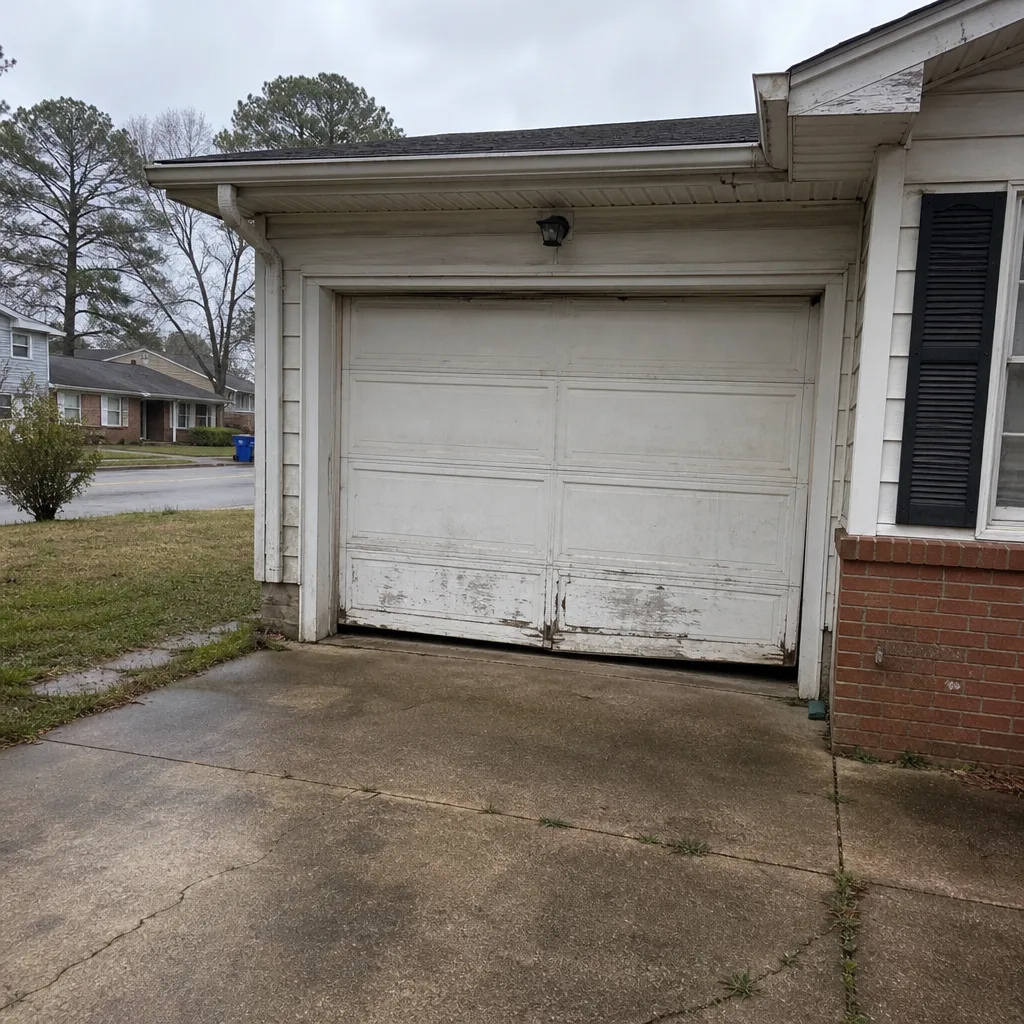 Before
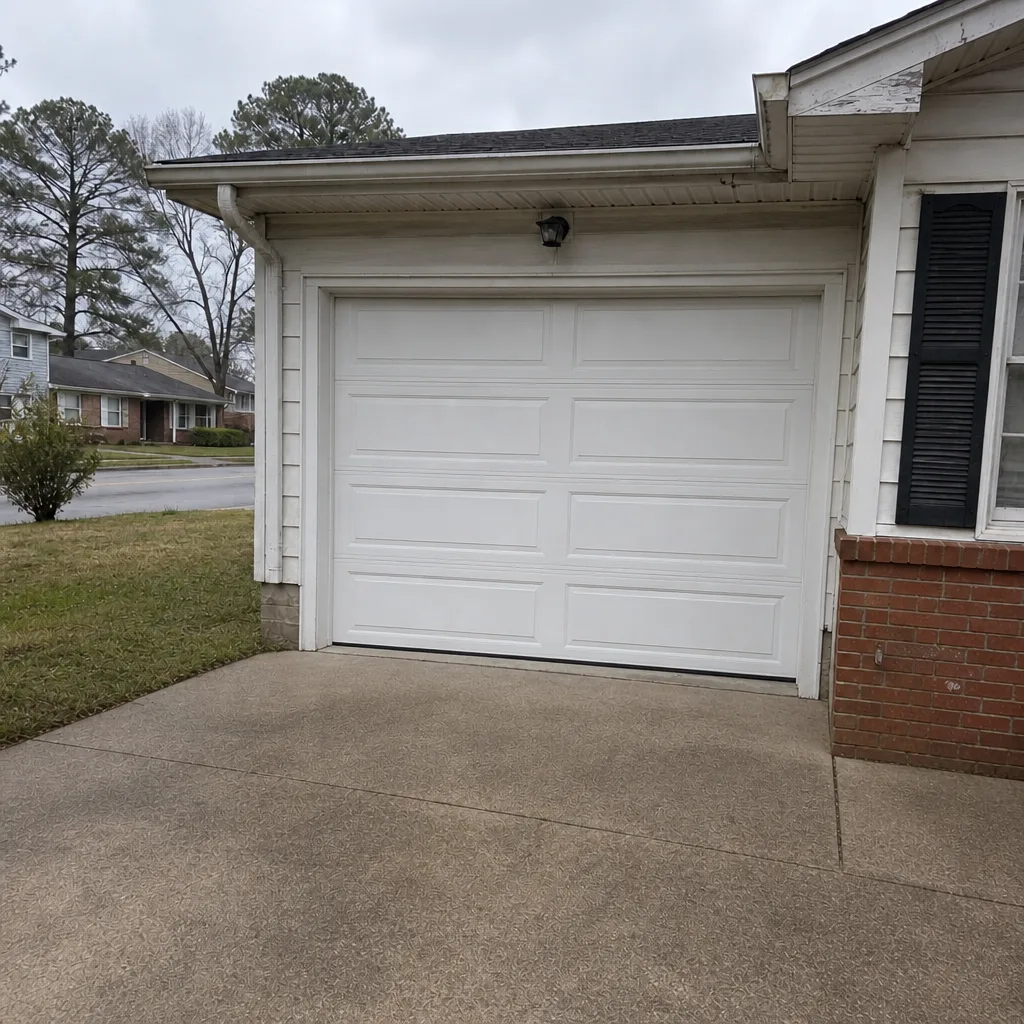 After
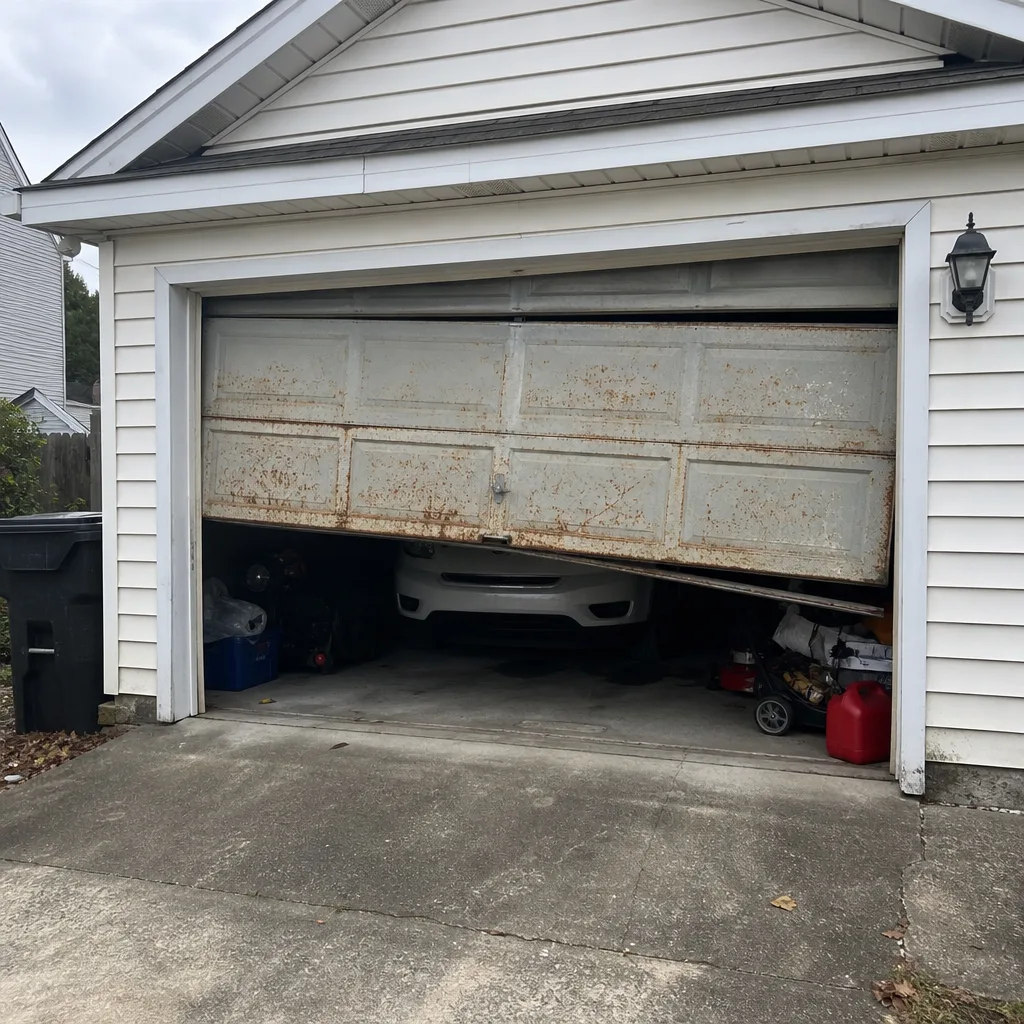 Before
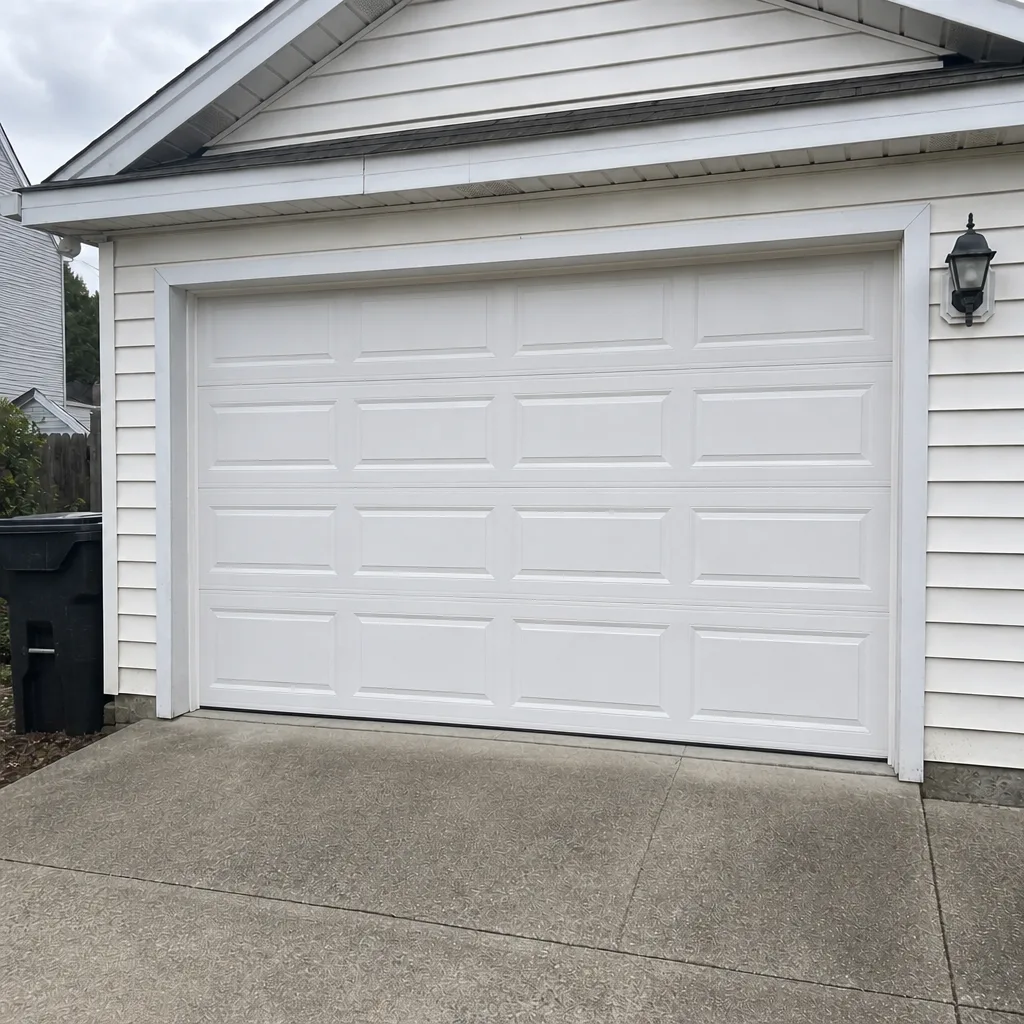 After
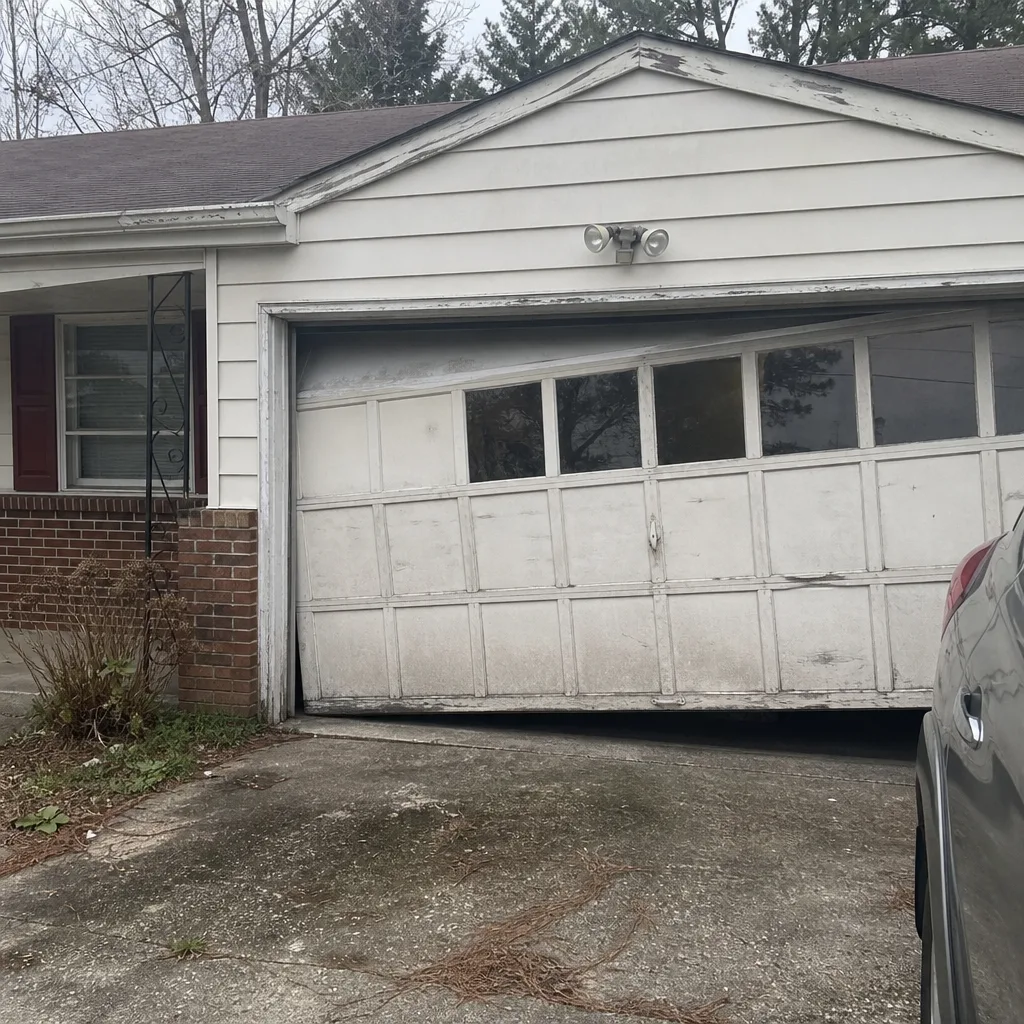 Before
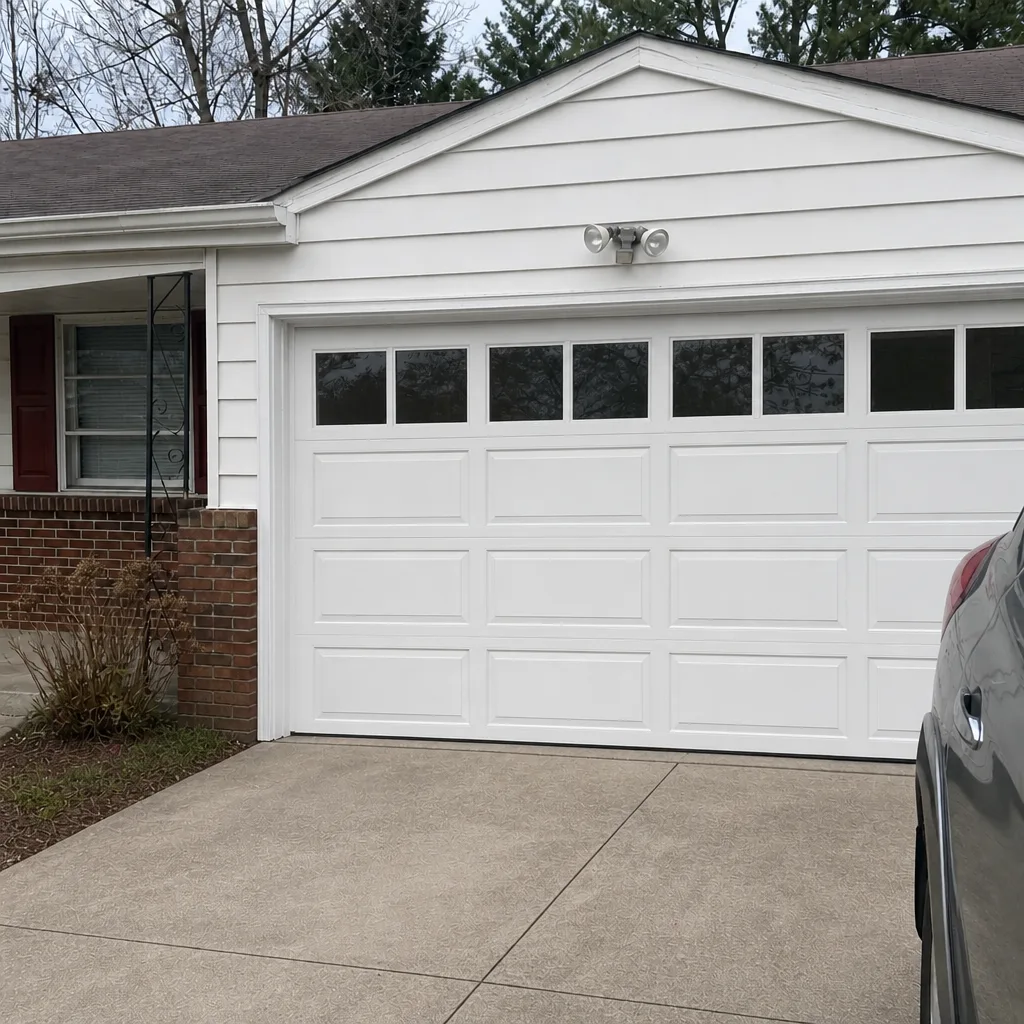 After
When to Call a Professional
Call when you can’t verify the door is safe to cycle. That means any broken spring, any cable off its drum, a track that’s pulled from the wall, or a door that hesitates, jumps, or runs unevenly. It also means any opener that reverses without an obstruction you can see. Springs and cables store enough energy to cause serious injury, so treat those as hands-off no matter how confident you feel with tools. The rest, from grinding rollers to a dropped remote range and a worn bottom seal, deserves a scheduled visit but isn’t a today-call.
Portsmouth Garage Door Repair Pros offers free estimates in Portsmouth and the surrounding area, and we can work with virtually any system already installed on the door. If your door is showing one of the signs in this guide, call (855) 937-1767 and we’ll help you sort out what you’re looking at.
Frequently Asked Questions
The clearest signs are a visible gap or stripe of bare metal in the torsion coil, a door that hesitates before it moves, and a door that feels much heavier than normal when you try to lift it disconnected from the opener. Surface rust that lines up in a single band is another predictor. If any of those are present, stop using the door and call for a technician to inspect it. For spring work specifically, our team handles garage door spring repair as a dedicated service. Call (855) 937-1767 for a free estimate.
Grinding usually means a roller or hinge has lost lubrication and the bearings are wearing, or a torsion spring has lost tension and is dragging against the shaft. It’s not a stop-today sign, but it accelerates wear quickly. Have it looked at within the week; seized rollers can bring the door to a halt. Call (855) 937-1767 to schedule.
A door that reverses without an obstruction is usually tripping its safety sensors or its force travel limit. The sensors (the small lenses on the bottom corners of the track) are most often the cause: dust, misalignment, or low-angle sun hitting the receiving lens. If cleaning and realigning the sensors doesn’t fix it, the opener’s force setting has drifted, and that’s a technician call. Call (855) 937-1767 for a same-day appointment.
Once a month is enough for most Portsmouth homes, and it takes ten minutes with no tools. Damp winters and humid summers accelerate wear on springs, cables, and seals here, so a monthly check catches small problems before they turn into emergency calls. If you live in an older home, watch the tracks against the framing more often. Call (855) 937-1767 with anything that doesn’t look right.
No. Torsion springs are under extreme tension and specialists use specific winding bars and procedures that homeowners shouldn’t attempt. A released spring can cause serious injury. This is the one repair on any garage door that belongs to the pros. Our technicians are equipped and experienced for it, and we handle spring work as a dedicated service. For more on our full scope, see Portsmouth Garage Door Repair Pros. Call (855) 937-1767 for a free estimate.
A good technician will diagnose the component first and only recommend full replacement if the mechanism or panels are truly beyond repair. If someone suggests replacing the whole door without ever looking at the opener, cables, and springs, get a second opinion. We repair what your system needs on your existing brand and only quote replacement when the repair doesn’t make sense. Call (855) 937-1767 for a free estimate.
The Bottom Line
Your garage door is a mechanical system with a baseline sound and a baseline movement, and every failure starts with a deviation from that baseline you can spot months before the breakdown. The warning signs worth memorizing are broken or strained springs, slack or frayed cables, tracks pulling from the wall, doors that hesitate or run unevenly, and openers that slow, reverse, or lose remote range. Match each sign to an urgency level: broken spring or loose cable means stop and call, grinding or reversing means schedule within the week. Portsmouth’s damp climate adds its own layer of wear, so a monthly ten-minute check is the highest-value maintenance on the property. When something in this guide shows up on your door, call a technician before the door decides for you.
If your door is showing any of these signs and you’re in Portsmouth, we’re ready when you are. Portsmouth Garage Door Repair Pros handles spring repair, cable repair, opener repair on LiftMaster, Chamberlain, Genie, and Craftsman systems, and full installation on Clopay, Amarr, Wayne Dalton, and Raynor doors. Our technicians have up to 15 years of experience. Call (855) 937-1767 for a free estimate, or for emergency service when the door won’t move.
Written by the team at Portsmouth Garage Door Repair Pros.