Last updated November 22, 2026
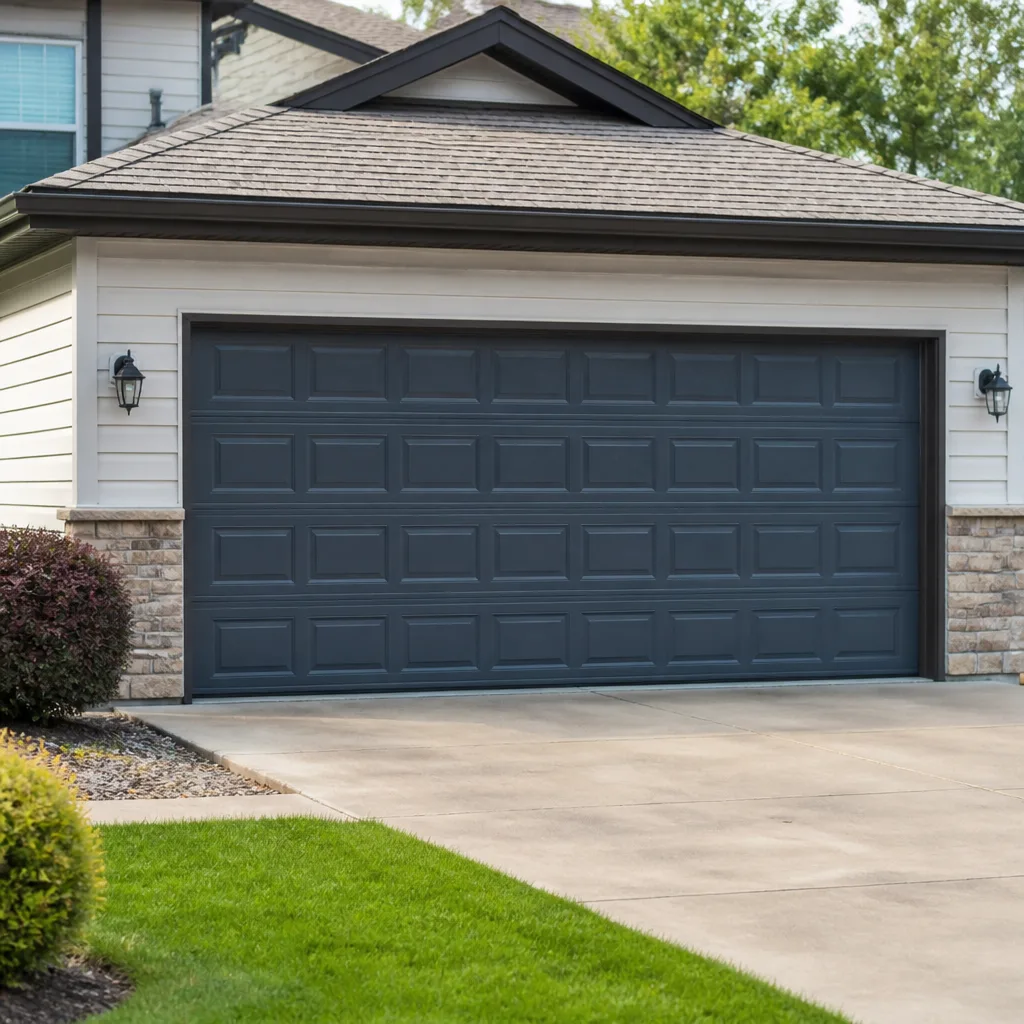 Raised-panel steel
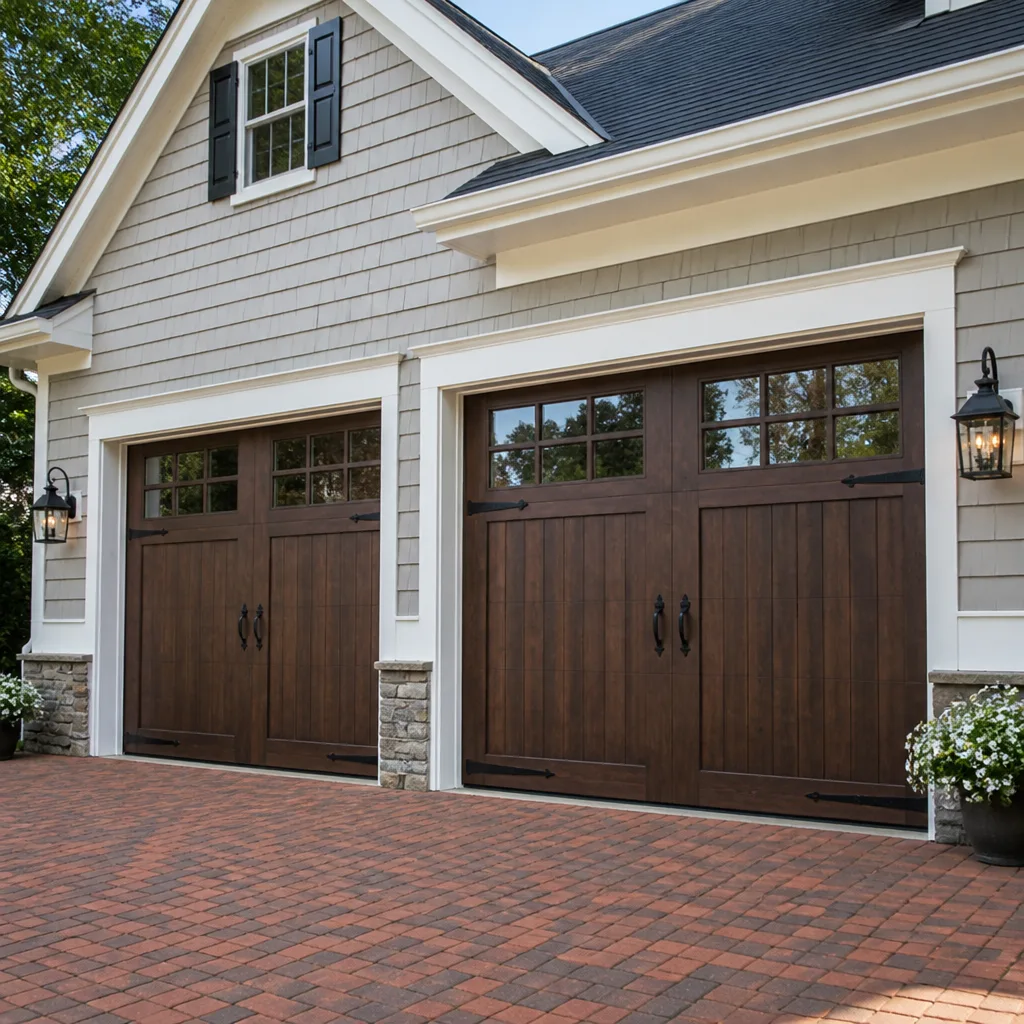 Carriage house
 Modern flush
 Full-view glass
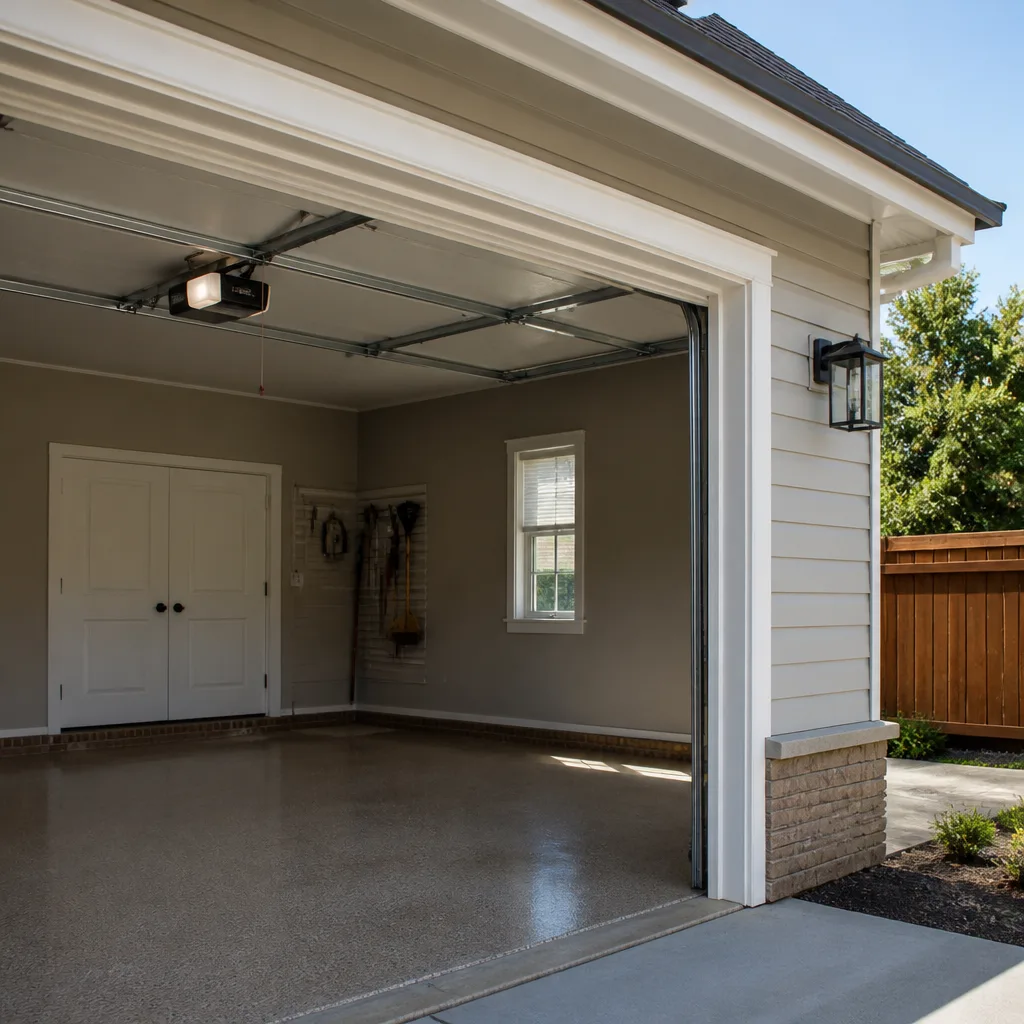 LiftMaster openers
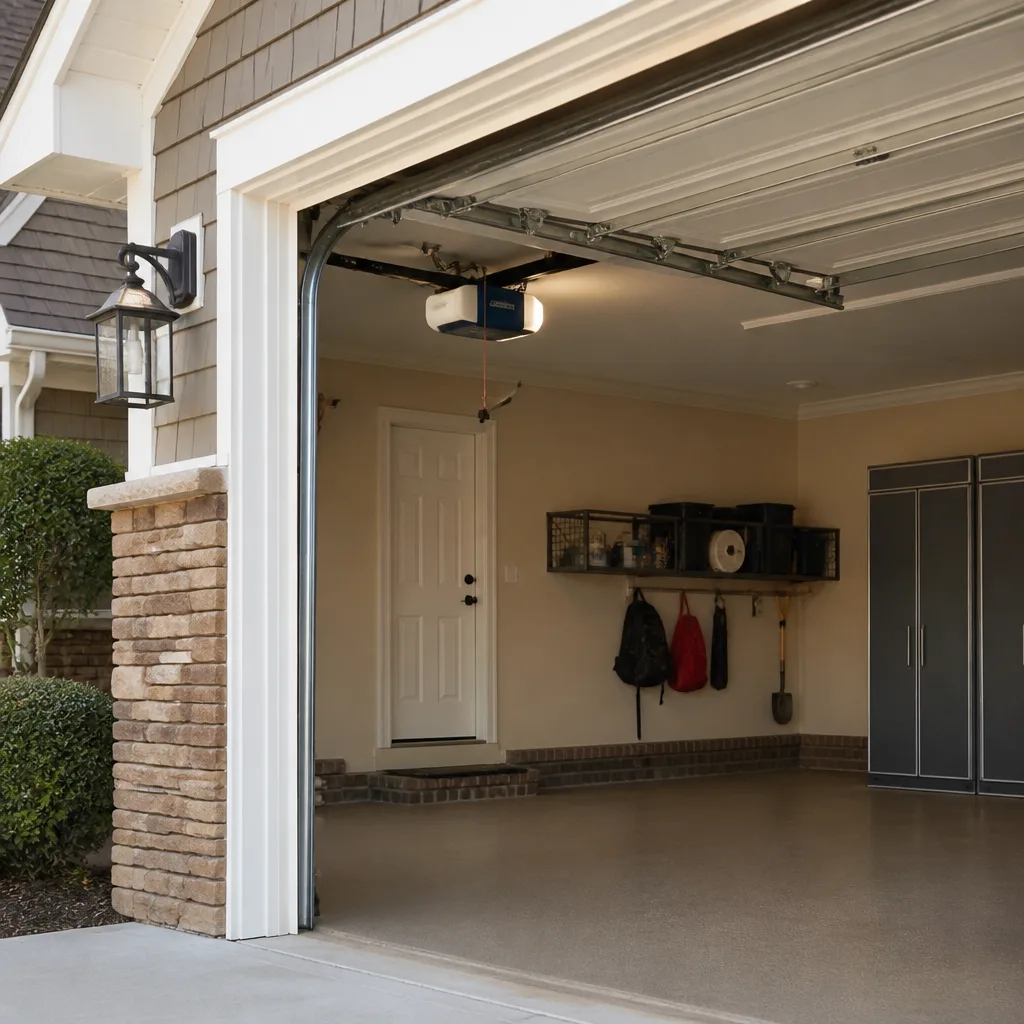 Chamberlain openers
Full 25-point door and opener safety check with every visit - springs, cables, rollers, tracks, and your LiftMaster or Chamberlain opener included
You get a price before we start. It does not change when the pro arrives.
Get your free estimateHow to Hire a Garage Door Contractor in Portsmouth: A Step-by-Step Guide
The contractor who answers the phone fastest isn’t always the right one. In this trade, the most expensive callbacks tend to come from technicians who adjusted the wrong component because they only knew one brand’s system – and by the time the door starts reversing again, you’ve paid twice for a problem that should have been solved once. Hiring a garage door contractor in Portsmouth means asking better questions up front, before anyone touches your door, because the answers tell you whether you’re talking to a multi-brand technician or a dealer who profits from selling you a brand-new door. This guide gives you a vetting framework for competence and honesty, not just availability, so you can separate the two before money changes hands.
Quick Answer
To hire a garage door contractor in Portsmouth, verify the company services your specific brand (not just the one it sells), confirm it’s properly licensed as a Virginia contractor, insist on a written diagnostic before any replacement talk, and compare quotes line by line rather than by total. A good contractor identifies the actual failure point first – a spring, a cable, an opener logic board – and prices the repair before suggesting a new door. If a company can’t tell you what’s wrong with your existing system, that’s your answer.
Styles & brands we work with
- Raised-panel steel
- Carriage house
- Modern flush
- Full-view glass
- LiftMaster openers
- Chamberlain openers
Table of Contents
- Why Multi-Brand Experience Matters More Than Brand Certification
- The Questions to Ask Before You Book Anyone
- What Virginia Licensing Actually Covers and How to Verify It
- Red Flags in a Quote: Vague Line Items, Forced Replacement, Cash Only
- How to Compare Quotes When the Math Doesn’t Match
- Spring Repair: The One Job You Never Vet Loosely
- When the Door Won’t Move: Emergency Hiring Done Right
- What’s Different About Hiring in Portsmouth
Why Multi-Brand Experience Matters More Than Brand Certification
Most homeowners didn’t pick their garage door system. It came with the house, or a builder installed it, or a previous owner went with whatever was on sale. That means the brand on your door is often a surprise – a Craftsman unit from a big-box store, a Raynor door from a builder’s bulk order, or a LiftMaster opener someone upgraded years ago. A contractor who only works on one brand’s systems will either decline the job or, worse, push a replacement so they can install what they know.
This is the single biggest filter in the hiring decision, and it gets missed constantly. Certification badges look reassuring, but a badge for one brand tells you nothing about whether the technician can diagnose a competitor’s torsion system. What you actually want is breadth: a company that works on the door you have, whatever it is.
At Portsmouth Garage Door Repair Pros, we’re factory-familiar with eight major brands – LiftMaster, Chamberlain, Genie, Clopay, Amarr, Wayne Dalton, Craftsman, and Raynor – which means our starting point is diagnosis, not a sales pitch. Our technicians have up to 15 years of experience, and that experience spans the two dominant smart-home opener lines, LiftMaster and Chamberlain, as well as legacy Craftsman and Genie systems that are still installed in a lot of Portsmouth homes.
Here’s the practical takeaway: brand certification is a nice bonus. Multi-brand competence is the requirement. Ask any contractor to name the brands they service off the top of their head. The ones who can rhyme off several, and explain the differences between them, are the ones who’ll fix what you own rather than talk you into a trade-up.
The Questions to Ask Before You Book Anyone
The best vetting happens in a two-minute phone call, before anyone is in your driveway. These questions are designed to reveal whether the company diagnoses first or sells first. Ask them plainly and listen to how specific the answers are.
- “Do you service [your brand]?” Name the brand on your door or opener. If they hesitate, hedge, or redirect to “we can install a new one,” keep calling. A technician who works on your system answers immediately.
- “What would you check first if my door won’t close all the way?” A competent answer mentions the safety sensors, the track alignment, the springs, and the opener’s travel limits – in that order of likelihood. A vague “we’d have to come out and see” is fine, but a technician who can’t name the usual suspects hasn’t done many.
- “Do you charge a diagnostic fee, and does it come off the repair if I go ahead?” Get the number before you book. Some companies waive the fee if you proceed; some don’t. Either is legitimate. What matters is that you know upfront.
- “Will you give me a written quote before starting work?” The answer should be an unambiguous yes. The price you agree to before work starts is the price you pay.
- “Do you carry parts for my system, or will this be a special order?” Springs, cables, rollers, and hinges are common. A logic board or a specific opener part may need ordering. Knowing the difference sets expectations on timing.
- “Can you repair the door, or are you only set up to replace it?” This is the honesty filter. A contractor who defaults to replacement before seeing the door is a contractor with a business model, not a repair service.
Write the answers down. When you have two or three quotes in hand, the notes from these calls often tell you more than the numbers do. A Portsmouth homeowner with a Raynor door, for example, will quickly find that the companies who can describe Raynor’s specific hardware at the other end of the phone are the ones who’ll actually fix it.
What Virginia Licensing Actually Covers and How to Verify It
Virginia requires contractors to hold a license through the Department of Professional and Occupational Regulation (DPOR), and you can verify any contractor’s license status through the DPOR’s online license lookup in about two minutes. Have the company’s business name and, if you have it, its license number ready. The lookup tells you whether the license is current, what classification it carries, and whether there are any disciplinary actions on file.
Here’s what that license covers and what it doesn’t. The license confirms the business is registered, carries the required insurance, and is accountable to a state authority for how it conducts work. It does not confirm a technician is skilled with torque wrenches, torsion springs, or your specific opener brand. Licensing is the floor, not the ceiling. It tells you the company exists in a legitimate sense; it doesn’t tell you whether the person showing up knows how to balance a door safely.
What to verify in those two minutes:
- The business name on the license matches the name on your quote.
- The license is current and not expired or suspended.
- The classification matches the work – residential garage door service is treated as a home improvement or specialty contracting activity in Virginia, so confirm the license category fits the job.
- The DPOR record shows no unresolved disciplinary items.
Ask the company directly too: “Are you licensed and insured as Virginia requires for this work?” A straightforward yes with a license number is what you want. If the answer gets fuzzy, that’s a signal to keep looking. A contractor who’s done this legitimately knows their license details without scrambling. Combine this check with a quick review of the company’s service pages, such as their garage door repair offering, to make sure the work you need falls inside their stated scope.
Red Flags in a Quote: Vague Line Items, Forced Replacement, Cash Only
Most dishonest or simply careless quotes give themselves away before the technician even arrives, and the pattern is consistent. Watch for these in writing, on the phone, or in the driveway.
- A quote with a single lump sum. “Garage door repair: $625” tells you nothing. A real quote itemizes what’s being replaced – this many springs, this many rollers, cable, hinges, labor, disposal – so you can see what you’re paying for.
- Replacement recommended before diagnosis. If the first thing a technician says is “you need a new door” without opening the opener housing, testing the balance of the door, or inspecting the springs and cables, you’re talking to a salesperson. Full replacement is sometimes correct, but it’s a conclusion, not a starting point.
- Cash-only payment requirements. Legitimate contractors accept checks, credit cards, or standard invoicing. Cash-only is a way to avoid a paper trail, and it should make you pause. Insist on a written invoice and a normal payment method.
- Pressure to decide today. A repair that’s genuinely urgent is urgent because the door is stuck or unsafe, not because a price will vanish tomorrow. High-pressure urgency from a non-emergency call is a sales tactic.
- No written estimate. Never approve work on a verbal number. The price should be quoted and agreed in writing before any work starts, so there’s no room for an invoice surprise.
- Unwillingness to name the failing part. “Something’s off with the springs” is not a diagnosis. A good technician tells you which spring, what’s wrong with it, and why it failed.
None of these red flags is proof of fraud on its own. But two or three together are a clear signal to get another quote. In Portsmouth, where a lot of older homes still have original builder-installed doors, the pressure to replace is real – and a homeowner with a sound door that just needs a new spring has every right to refuse the upsell.
How to Compare Quotes When the Math Doesn’t Match
Comparing garage door quotes is trickier than it looks, because contractors itemize differently. One quote bundles labor into the parts price; another lists labor separately; a third charges a trip fee on top. The totals aren’t apples to apples, even when the numbers look close. The right way to compare is to convert everything to the same line items.
Build a simple comparison on paper. For each quote, list these categories side by side:
- Diagnostic or trip fee – a flat charge to come out and assess.
- Parts – springs, cables, rollers, hinges, opener components, each by quantity and unit price. Spring pricing is usually per spring, and a matched pair is typically replaced together, so a pair costs roughly twice a single spring.
- Labor – listed separately or folded into parts. Either is fine, but you need to know which.
- Disposal or haul-away – common for full replacements, rare for repairs.
- Warranty terms – what’s covered, for how long, and on parts versus labor.
Once the categories line up, the honest comparisons show themselves. A quote that looks $75 cheaper often hides a trip fee it didn’t mention, or a labor charge folded in elsewhere. A quote that’s $150 higher may include a longer parts warranty. Neither is automatically better – but you can only weigh them when the line items match.
Ask each company to email or text the quote in writing. Then, if a number is vague, call back and ask for the breakdown. Reputable companies expect this and produce it without friction. If you want to understand typical price ranges before you start comparing, our garage door spring repair page lays out what individual jobs tend to run in this market.
Spring Repair: The One Job You Never Vet Loosely
Torsion and extension springs are under extreme tension, and they are the single most dangerous component in a garage door system. They also fail more than anything else. That combination is why spring work is the part of the hiring decision that deserves the most scrutiny – not because springs are complicated, but because the consequences of a mistake are severe.
The safety point comes first: never attempt to adjust, remove, or replace a spring yourself. The tension stored in a wound torsion spring can release suddenly and with enough force to cause serious injury. This isn’t a warning to pad out a page; it’s the reason spring replacement is a trained-professional job, full stop. Even experienced technicians use winding bars and specific procedures to release and reset tension safely.
When you hire for spring work, ask these questions:
- “Are you replacing one spring or both?” If your door has two springs and one broke, the other is the same age and under the same wear. Replacing both together is usually the right call, and a good contractor will explain why rather than quietly quoting a single spring and leaving you to repeat the job later.
- “What cycle rating are the springs you’re installing?” Springs are rated by how many cycles they’re designed to last. Ask what you’re getting, and whether a higher-cycle option is available.
- “Do you check the cables and drums while you’re in there?” A failing cable next to a fresh spring is a problem waiting to happen, and the inspection is quick.
- “What does the warranty cover on the spring itself versus the labor?” These are often different, and both matter.
Spring repair is a named, dedicated service at Portsmouth Garage Door Repair Pros, not a footnote on a general repair page. That’s a meaningful signal: a company that treats springs as a specialty is a company whose technicians are equipped and trained for the highest-risk job in the trade. If a quote for spring work feels vague, that vagueness is the red flag. Our team is happy to walk you through exactly what a spring replacement on your door involves – call us at (855) 937-1767 with the rough age of your door and the make of your opener, and we can usually narrow down what you’re dealing with before anyone arrives.
When the Door Won’t Move: Emergency Hiring Done Right
A stuck door is either a security problem, a weather-exposure problem, or a wall between you and your car. When that happens, the vetting you did calmly pays off – and the questions change slightly. You’re now evaluating response and safety, not just price. Emergency service should be a real, active offering from a company that can actually get to you, not a vague promise on a website.
Use these questions when calling in an emergency:
- “How soon can someone be out?” Ask for a realistic window, not a guess. A company that actually does emergency work will give you a specific timeframe.
- “What should I do with the door in the meantime?” If the door is stuck open, a technician can tell you how to secure it safely. If it’s stuck closed and you need access, they can advise whether forcing it is safe – usually it isn’t.
- “Is the door safe to be near right now?” If you hear a bang, see a broken spring, or notice a cable dangling, the door may be structurally compromised. Keep people and vehicles clear until a technician arrives.
- “Will you diagnose before recommending a fix?” Even in an emergency, replacement shouldn’t be the first suggestion. Most stuck doors are a repair, not a replacement.
Emergency work is a core part of what we do at Portsmouth Garage Door Repair Pros – it’s the call when a door is stuck open, stuck closed, or structurally compromised. And when the fix turns out to be a full replacement, we can handle that too, which means you’re not bounced to a second company. If you’re dealing with an opener that won’t respond rather than a structural failure, our garage door opener repair page covers the usual culprits.
What’s Different About Hiring in Portsmouth
Portsmouth has a housing stock that shapes garage door hiring in ways a national guide won’t tell you. A lot of neighborhoods here have homes with original or older builder-installed doors, which means the systems you’re hiring someone to work on are often a mix of brands – a Wayne Dalton door with a later Craftsman opener, or a Clopay door paired with a Genie unit. This is exactly why multi-brand experience matters here. A technician who only handles one brand will hit a wall in a Portsmouth driveway more often than they’d like to admit.
Older doors also tend to be heavier and less balanced, which puts more strain on springs and openers over time. When you’re vetting a contractor in Portsmouth, ask how they handle older hardware and whether they check the door’s balance as part of a diagnostic. A technician who tests the balance, checks the spring tension, and looks at the opener’s travel limits is doing the job right.
On permits and code: most cities require a permit for structural changes to a garage, and Portsmouth is no exception in general terms. If a job involves anything beyond a like-for-like part replacement – widening a door, changing structural framing, adding an opener to an existing door – ask the city’s building department what’s required before work starts. A reputable contractor will tell you the same thing and won’t discourage you from checking. For everyday repairs and replacements, permits usually aren’t required, but confirming with the city takes five minutes and settles any doubt.
One more Portsmouth note: because a lot of homes here are older and closer together, a garage door that’s off its track or stuck open is visible to the street. That’s a practical reason to prioritize a fast response when something fails, not just a convenience one. If you’re comparing contractors, look for one that treats emergency service as a real offering and can talk through security and exposure while you wait. You can start with the main services at Portsmouth Garage Door Repair Pros and work from there.
Common Mistakes to Avoid
- Hiring on speed alone. The fastest company to answer isn’t necessarily the most competent. Call three, ask the vetting questions, and pick the one whose answers were specific. A day spent vetting beats a callback you didn’t plan for.
- Skipping the license check. Two minutes on the Virginia DPOR lookup tells you more than a website’s “licensed and insured” badge. Do it before you book, not after.
- Accepting a replacement quote before a repair quote. If a contractor jumps to “new door” without diagnosing the failing part, get a second opinion. In Portsmouth’s older housing stock, plenty of doors labeled “worn out” just need springs and rollers.
- Comparing totals instead of line items. A cheaper total often hides a trip fee, a shorter warranty, or labor folded in elsewhere. Convert every quote to the same categories before deciding.
- Paying cash without an invoice. Cash-only requests are a red flag for a reason. Insist on a written invoice and a normal payment method, and keep the paperwork in case of a warranty claim.
- Replacing one spring when both are the same age. If you have a matched pair and one fails, the other is close behind. Ask about replacing both together and compare that against doing a single spring and risking a second visit.
- Forgetting to ask about the safety inspection. A good repair includes checking the safety sensors, the auto-reverse function, and the door’s balance. If those aren’t mentioned, ask whether they’re included.
See the difference
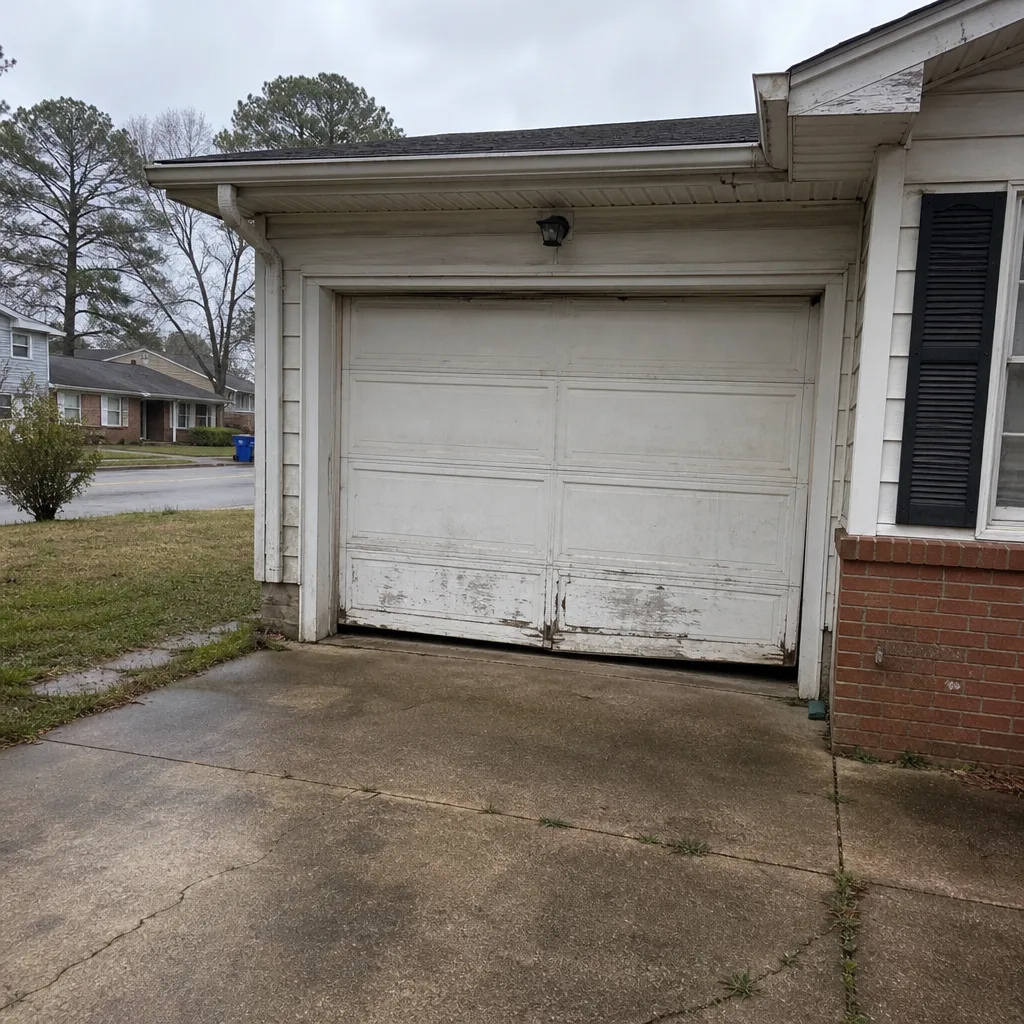 Before
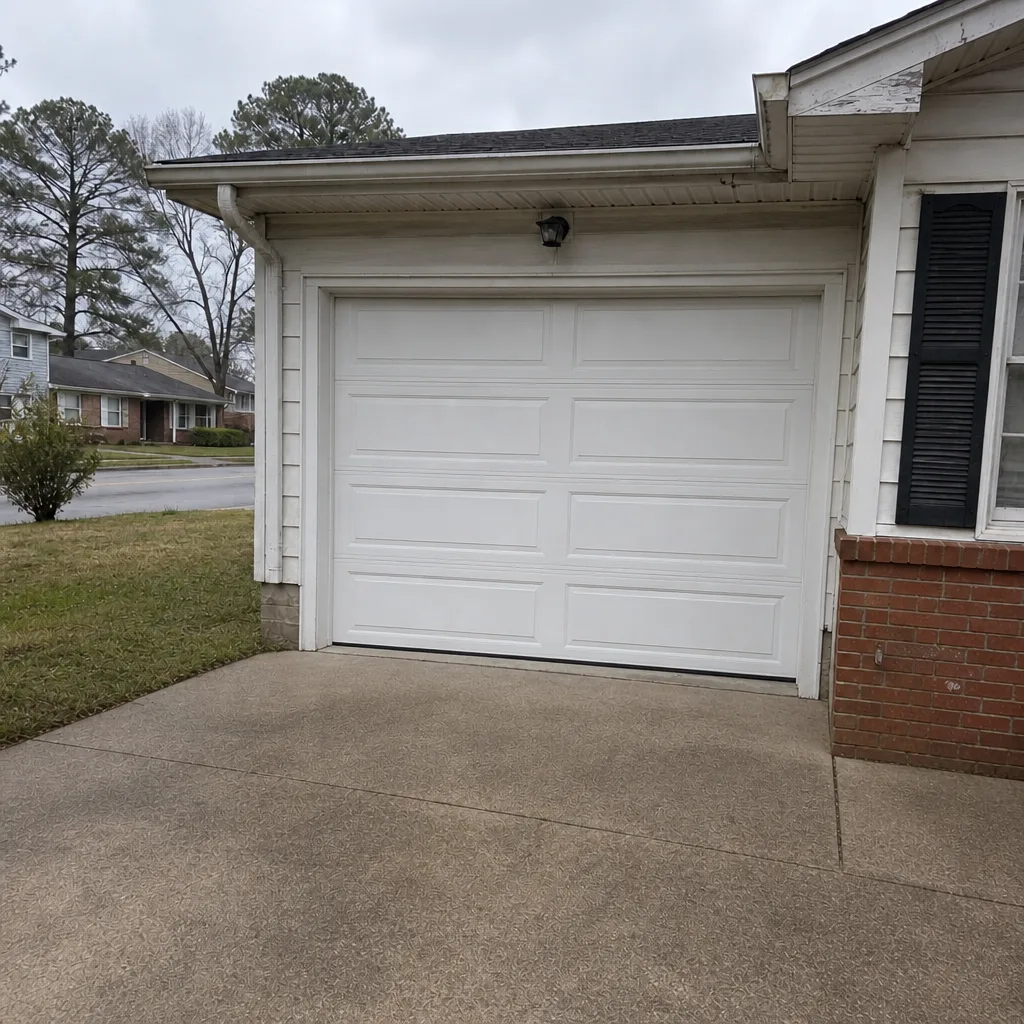 After
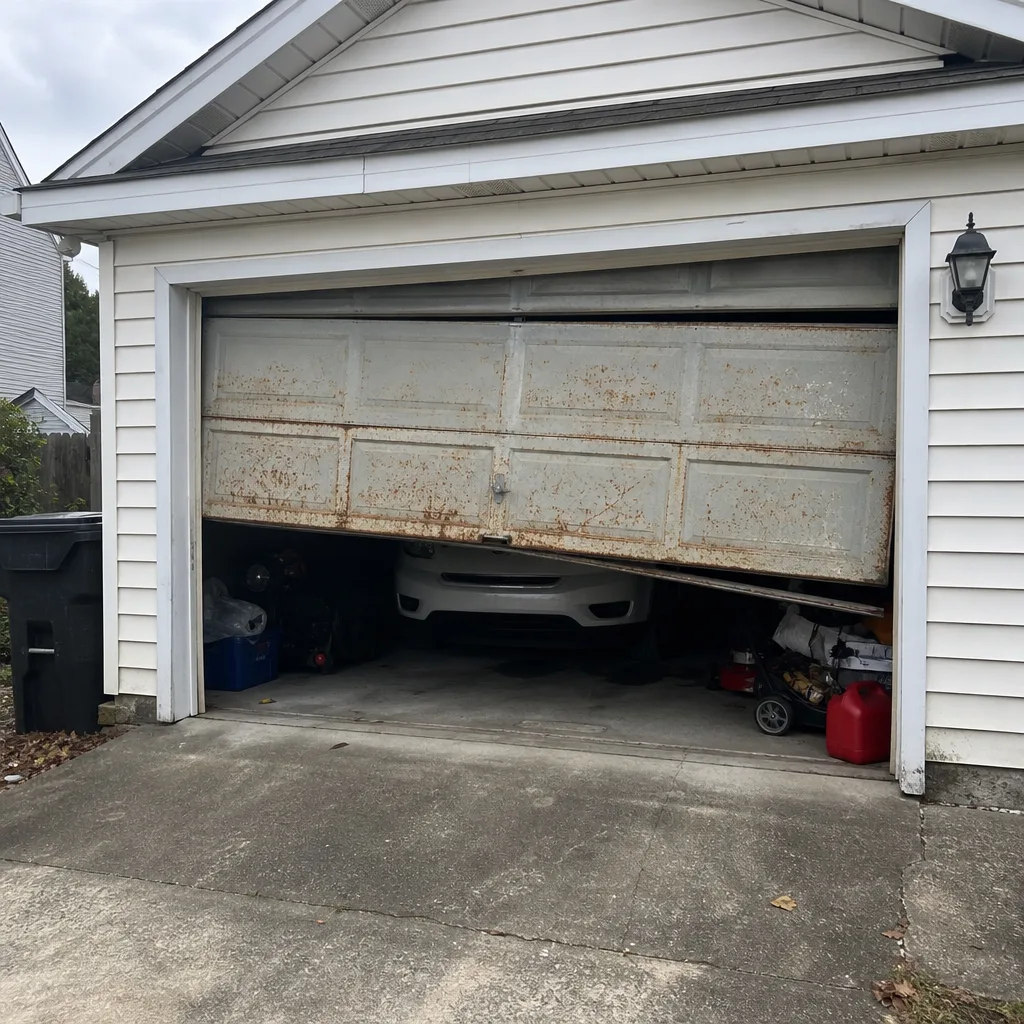 Before
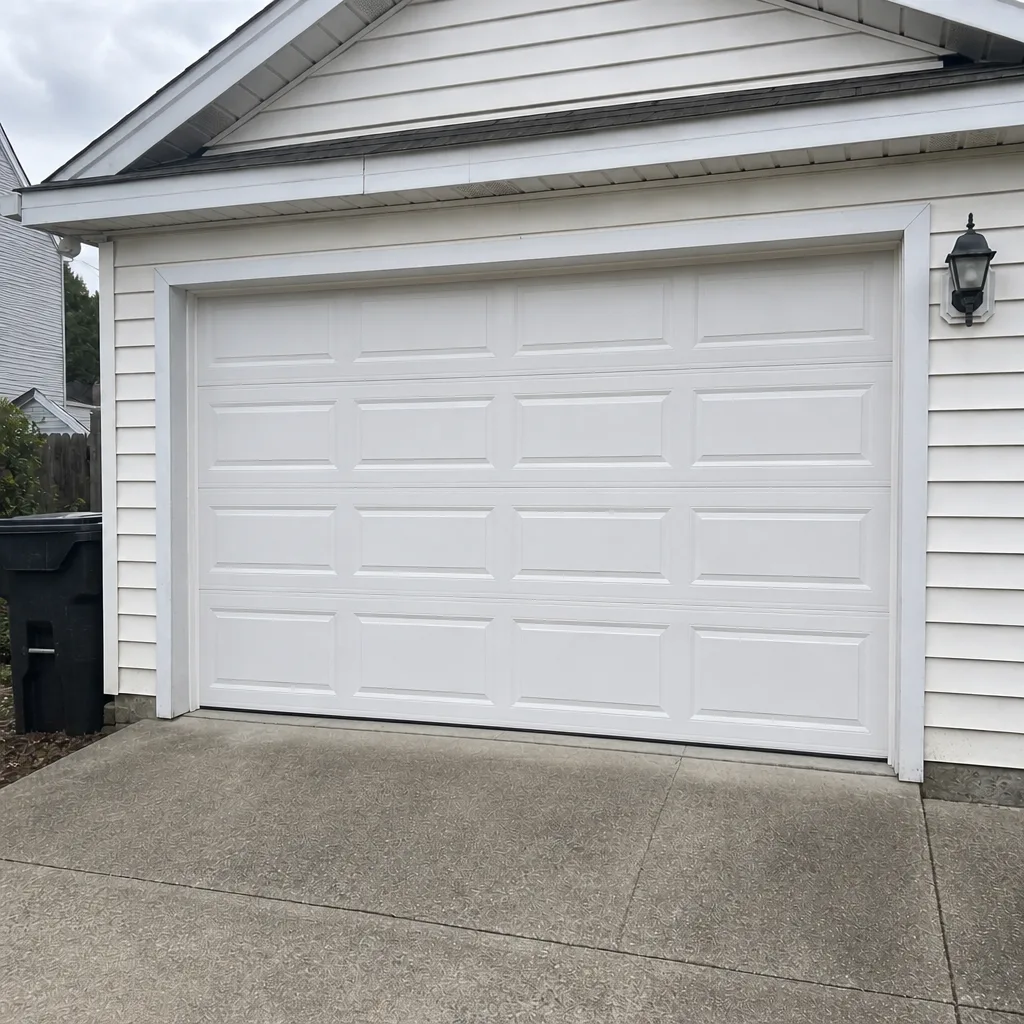 After
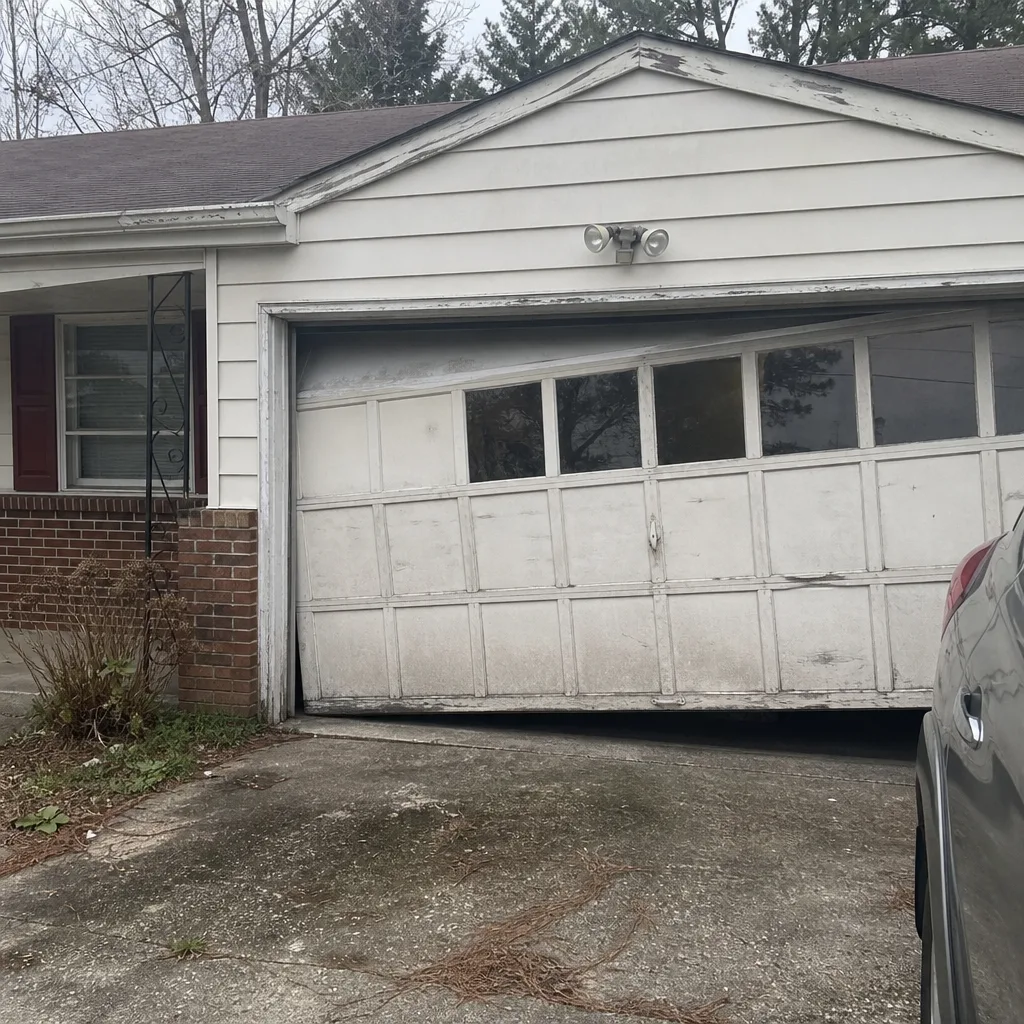 Before
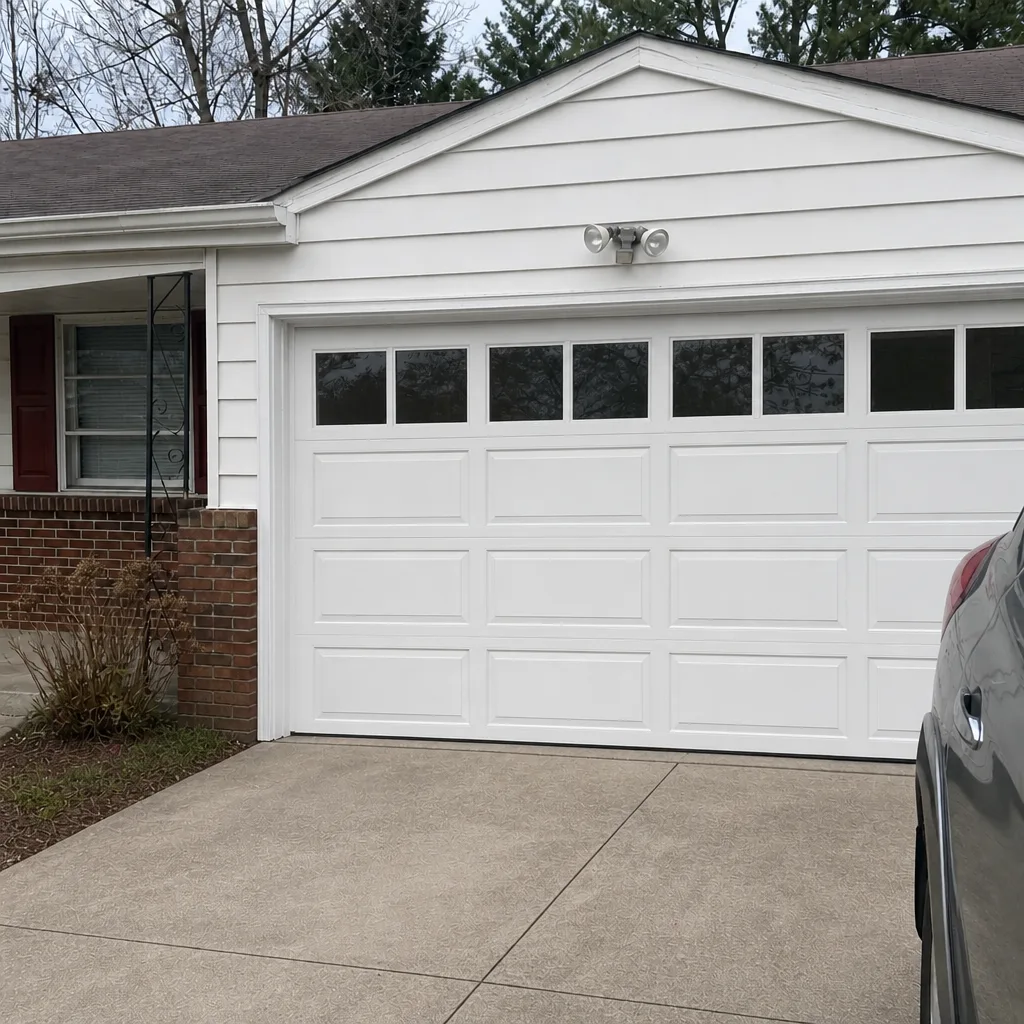 After
When to Call a Professional
Some garage door problems are safe to observe; almost none are safe to fix yourself. Call a professional if a spring is visibly broken, a cable is loose or snapped, the door is off its track, the door reverses or stops mid-travel, the opener runs but the door doesn’t move, or anything about the door feels unbalanced or heavy. Call immediately if the door is stuck open and you need to secure it, or if any component looks structurally compromised. Springs and cables in particular are tension-loaded and dangerous – keep clear and let a trained technician handle them. Portsmouth Garage Door Repair Pros offers free estimates in Portsmouth – call (855) 937-1767 and we’ll talk through what’s happening and what it takes to fix it.
Frequently Asked Questions
Ask them by name whether they service your specific brand, and listen for a specific answer rather than a redirect to a new door. A company that works on multiple brands – the way we handle LiftMaster, Chamberlain, Genie, Clopay, Amarr, Wayne Dalton, Craftsman, and Raynor – will confirm your brand immediately and can often describe its common failure points. If they hesitate or push replacement, look elsewhere. Call (855) 937-1767 for a direct answer about your system.
Virginia requires contractors to hold a license through the DPOR, and you can verify any contractor’s license status online in about two minutes. The license confirms the business is registered and accountable to the state; it doesn’t confirm technician skill with your particular system. Verify the license, then vet the technician’s experience separately. We’re happy to answer licensing questions when you call.
Repair costs depend on the part that failed – springs, cables, rollers, and opener components all price differently. Ask for an itemized written quote and compare it line by line rather than by total. For spring pricing specifically, a matched pair is typically replaced together and costs roughly twice a single spring. The written estimate sets the final price. Call (855) 937-1767 for a free estimate on your specific job.
Repair is almost always cheaper when the door itself is sound and only a component has failed, which is the majority of cases. Replacement makes sense when the door panels are damaged, the frame is compromised, or the repair cost approaches a new door. A good contractor diagnoses first and quotes repair before suggesting replacement. Ask for both options in writing so you can compare honestly.
Keep clear of the door and don’t try to open or close it manually – a broken spring can leave the door dangerously heavy, and the spring itself is under tension until it’s safely released. Call a professional immediately and describe what you see. Spring replacement is the highest-risk repair in the trade, and it’s one we handle as a dedicated service. Reach us at (855) 937-1767.
Yes, if you convert each quote to the same line items: trip fee, parts by quantity, labor, disposal, and warranty. Totals alone mislead because contractors bundle differently. Once the categories match, the real differences show up. If a number is vague, call the company back and ask for the breakdown – a legitimate contractor will provide it without hesitation.
The Bottom Line
Hiring a garage door contractor in Portsmouth comes down to a handful of habits: confirm the company services your brand before you book, verify the Virginia license in two minutes, insist on a written diagnosis before any replacement talk, and compare quotes line by line rather than by total. Watch for lump-sum quotes, forced replacements, and cash-only requests. Protect yourself on spring work above all – it’s the job where competence matters most and shortcuts hurt most. Do those checks, and you’ll hire someone who fixes the door you have instead of selling you one you don’t need.
Contact
If you’ve gone through the questions above and you’d rather just talk it through with a technician, call Portsmouth Garage Door Repair Pros at (855) 937-1767 for a free estimate. We work on the door you have – LiftMaster, Chamberlain, Genie, Clopay, Amarr, Wayne Dalton, Craftsman, or Raynor – and we can talk through repair, opener work, spring replacement, installation, or an emergency call the same way: diagnose first, quote in writing, then fix it right. Our technicians have up to 15 years of experience, and we’ll never recommend a replacement before we’ve identified the actual failure point. If your door won’t move, tell us what you’re seeing and we’ll move fast.
Written by the team at Portsmouth Garage Door Repair Pros.