Last updated November 22, 2026
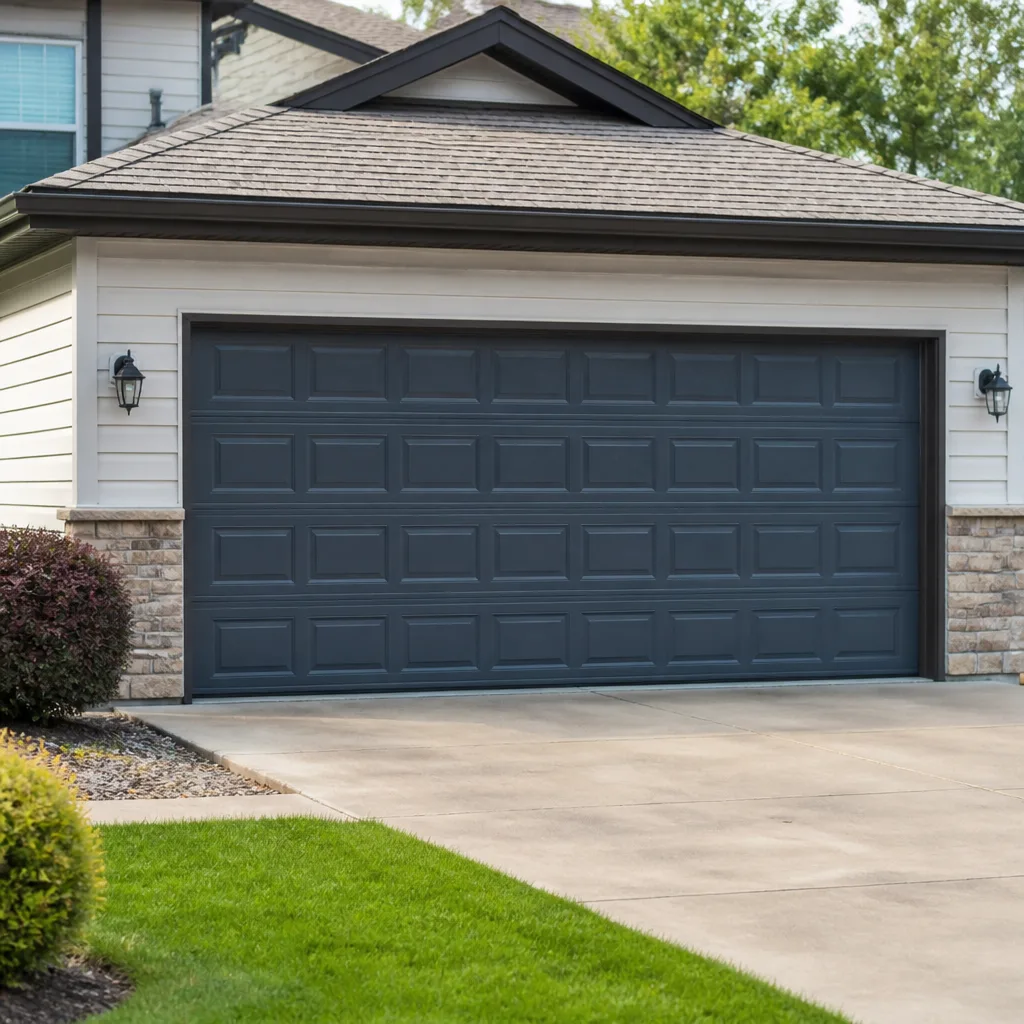 Raised-panel steel
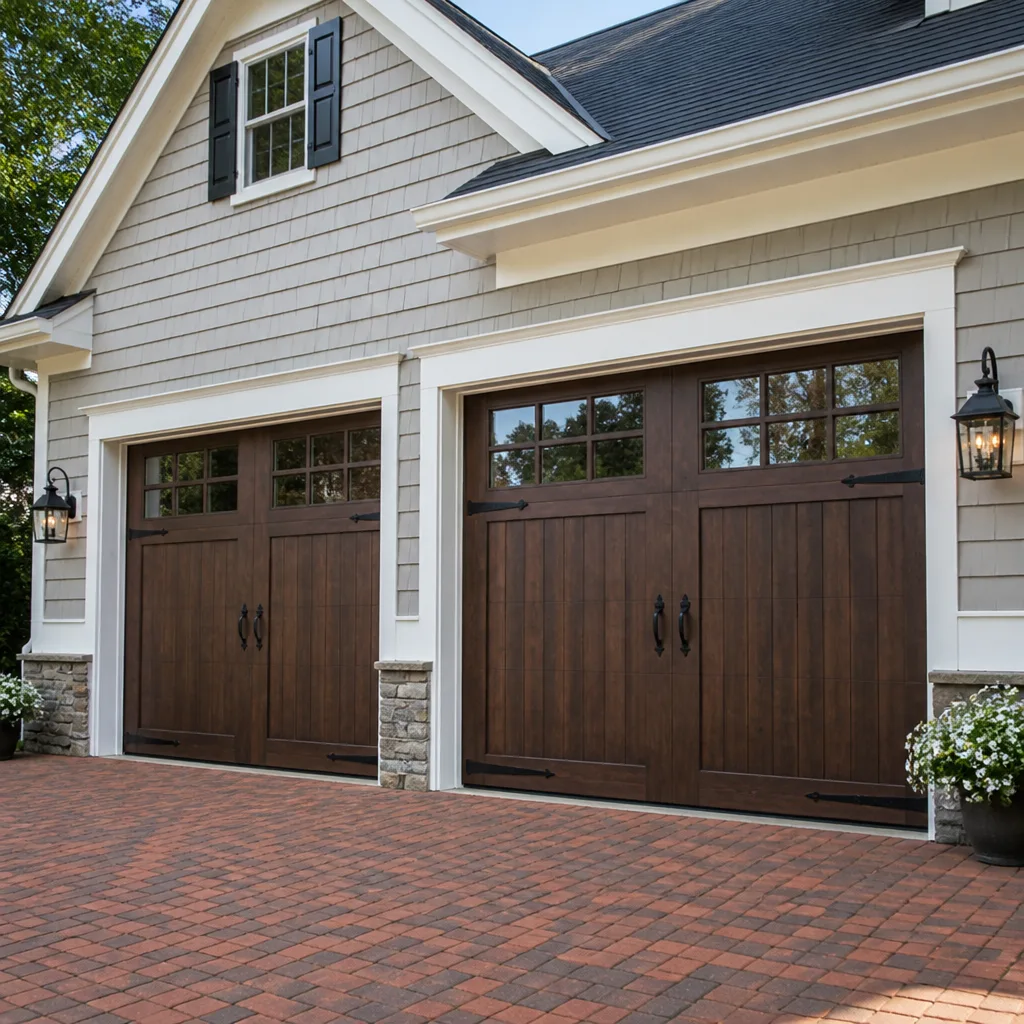 Carriage house
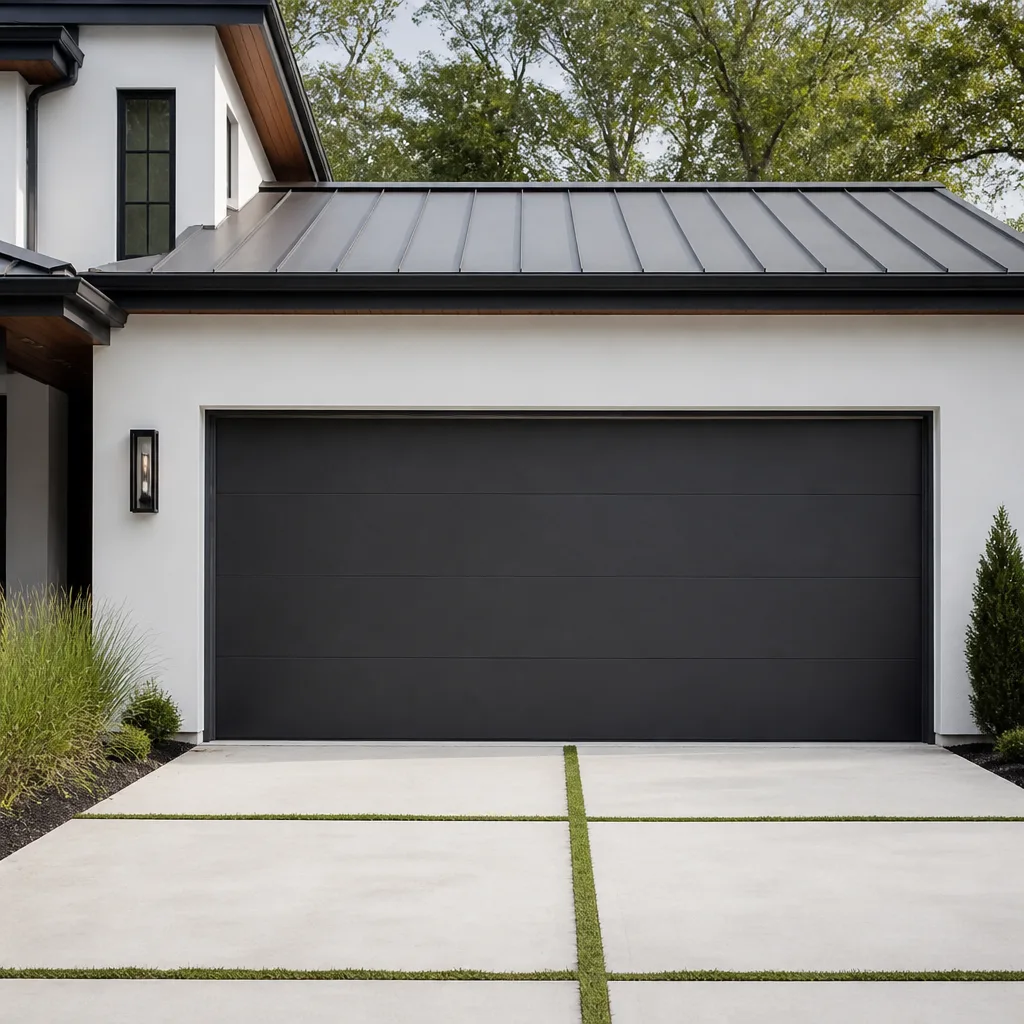 Modern flush
 Full-view glass
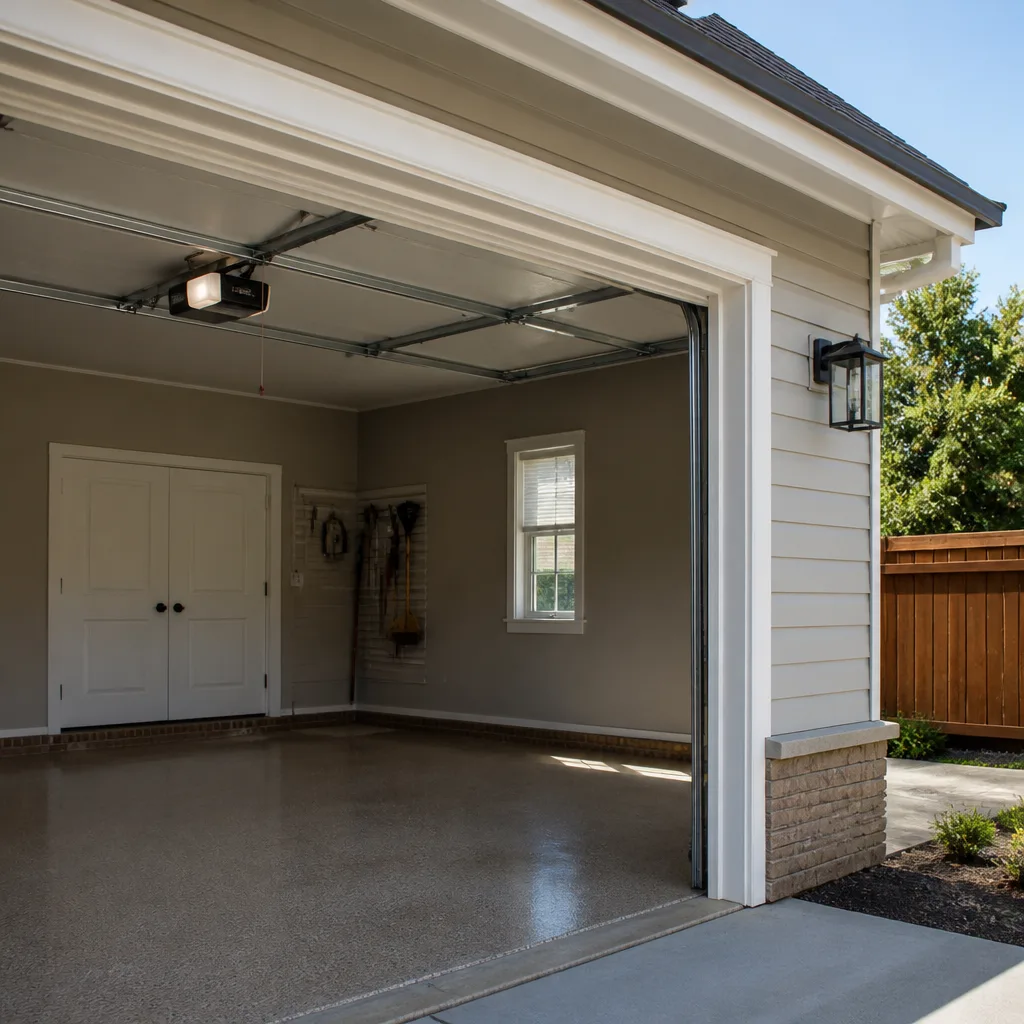 LiftMaster openers
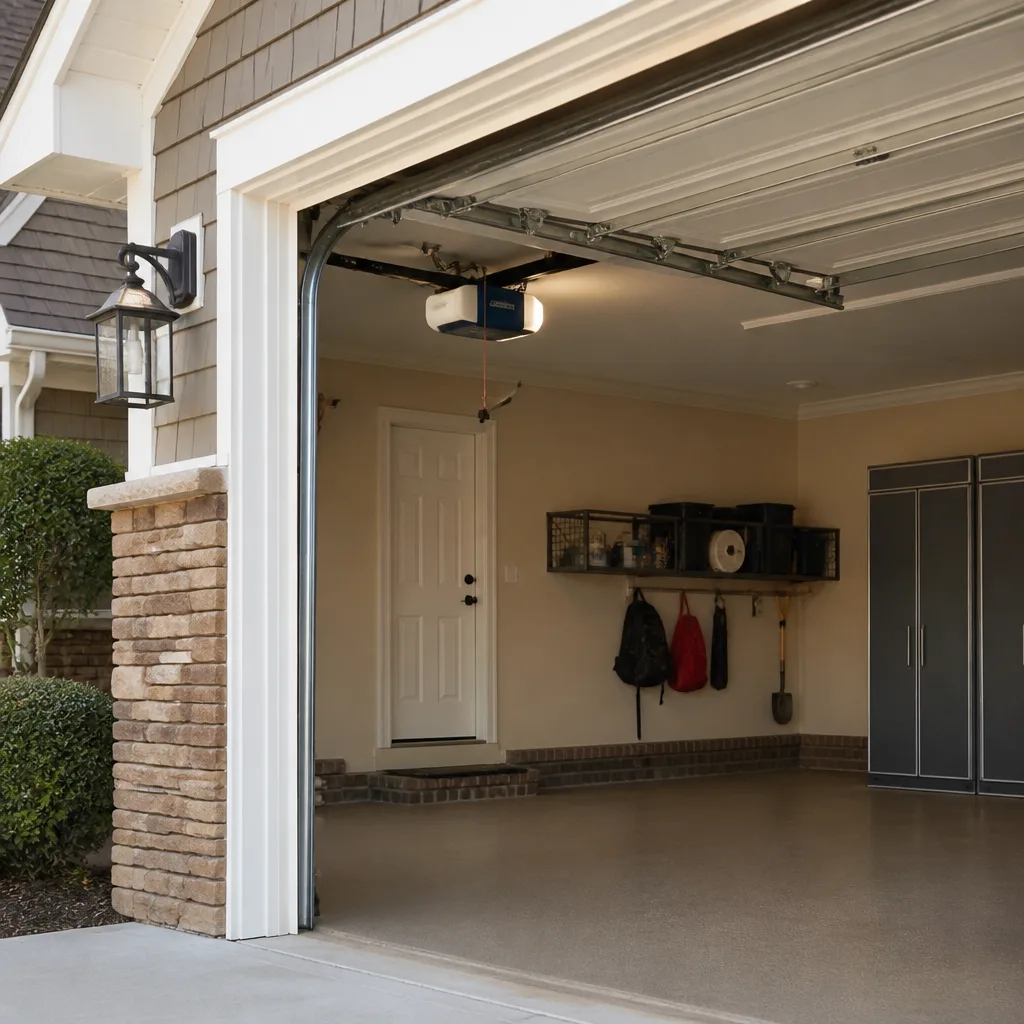 Chamberlain openers
Full 25-point door and opener safety check with every visit - springs, cables, rollers, tracks, and your LiftMaster or Chamberlain opener included
You get a price before we start. It does not change when the pro arrives.
Get your free estimateThe Complete Guide to Garage Doors in Portsmouth
Most garage door advice you’ll read online was written for a house in Ohio or Kansas, and it can be flat wrong for a home off Turnersyke Avenue or along the waterfront in Olde Towne. The mistake people make is treating their door as a single purchase instead of a system of materials, hardware, and an opener that all wear at different rates depending on where they sit. A steel door that behaves in a dry climate for two decades can start showing corrosion far sooner in air this humid, and the spring and cable hardware behind it is even less patient. This guide walks through every decision a Portsmouth homeowner actually faces: what to buy, how it wears, when to repair versus replace, and how to keep a door working through the weather we get here.
Quick Answer
The right garage door for a Portsmouth home balances corrosion resistance, insulation for our humid summers and cold snaps, and a service schedule shorter than the manufacturer’s standard timeline. For most local homeowners, a well-sealed steel or aluminum door with regular hardware inspections is the smart value, while fiberglass and wood composite make sense in specific situations. Repair usually beats replacement when the panels, tracks, and structure are sound and the problem is springs, cables, or the opener.
Styles & brands we work with
- Raised-panel steel
- Carriage house
- Modern flush
- Full-view glass
- LiftMaster openers
- Chamberlain openers
Table of Contents
- Why Portsmouth Conditions Wear Out Doors Faster
- Choosing a Door Material for Coastal Virginia
- Opener Drive Types in Our Temperature Swings
- The Real Service Interval for a Portsmouth Home
- How to Audit the Door You Already Own
- Repair or Replace: The Financial Call
- What a New Installation Involves Here
- Safety: The Parts You Should Never Touch
Why Portsmouth Conditions Wear Out Doors Faster
Garage door hardware fails on the parts you can’t see. Springs, cables, rollers, hinges, and the bottom bracket all sit in outside air, and in Portsmouth that outside air carries humidity and particles that settle into every moving joint. When a steel door that lives through a dry inland climate holds up for two decades, the same door near the waterfront here can show meaningful corrosion on the springs and cables in a fraction of that time. That’s not a knock on the door. It’s chemistry.
The daily temperature swing matters just as much. Our summers push humidity high enough that condensation forms on cold metal, especially overnight, and our winter cold snaps are sharp enough to make hardened steel brittle. A torsion spring absorbs thousands of load cycles a year; when the air keeps wetting it and the temperature keeps flexing it, the metal fatigues from both directions at once. That’s why we see spring failures on a timeline that surprises homeowners who followed a national guide.
The parts that age fastest in Portsmouth homes:
- Torsion and extension springs – corrosion pits the wire, and pitting begins a break.
- Lift cables – a coated or galvanized cable resists moisture better than a bare one, and a pitted cable is a snap waiting to happen.
- Steel rollers and hinges – they seize before they wear out, and a seized roller drags the whole door.
- Bottom brackets and fasteners – the low points hold moisture longer.
- Track and panel edges – the seams where water collects.
None of this means you bought the wrong door. It means your maintenance calendar for a Portsmouth home shouldn’t be copied from a manufacturer’s national chart. Shorten it and watch the hardware.
Choosing a Door Material for Coastal Virginia
Material choice in this market is really a corrosion and insulation decision, not a style decision. Every type can look good. The question is how it holds up to moisture cycling and temperature swing, and what it costs you in upkeep over a decade. Here’s an honest read, scored for the conditions we see in Portsmouth rather than a national average.
- Steel – the most common choice and usually the best value. Insulated steel doors with a good finish and a sealed bottom hold up well if you keep the hardware lubricated and catch corrosion early. It’s heavier, so the spring wears a working load. The trade-off is that a scratched panel is a corrosion start point, not a cosmetic blemish.
- Aluminum – naturally rust-resistant and lighter, so it’s easier on springs. It won’t match steel’s insulation and can dent more easily. For a homeowner who values low corrosion over maximum rigidity, it’s a genuinely good pick in this climate.
- Fiberglass – doesn’t rust, resists moisture, and often carries a wood-grain look. The bond between the fiberglass skin and its frame is the weak point, and a poorly finished fiberglass door can develop finish issues in heavy humidity. Buy from a maker that finishes it properly.
- Wood composite – solves wood’s swelling and rot problem by using engineered material, and it takes paint well. It needs repainting on a shorter cycle here than a national guide suggests. It’s a premium look with a maintenance commitment attached.
If you have an Amarr, Clopay, Wayne Dalton, or Raynor system already, we work on the door you have and can tell you whether a new finish coat or a panel swap is smarter than a full replacement. The material you choose should be driven by how much insulation the space above the garage needs and how much finish maintenance you’re willing to do.
Opener Drive Types in Our Temperature Swings
Your opener lives in the same humidity you do, and its drive type behaves differently here than the box stores suggest. The three common drives each handle Portsmouth weather in their own way.
- Belt drive – quietest, and it handles temperature swings gracefully because the belt flexes rather than resisting. It’s the best fit for a home where the garage shares a wall with a bedroom. It costs more up front and the belt can stiffen in a cold snap, so a proper break-in matters.
- Chain drive – the workhorse. Durable and fixes easily, but it’s noisier and the chain needs lubrication more often in high humidity to keep it from seizing. It’s the reliable choice for a detached garage.
- Screw drive – smooth and strong, with fewer moving parts, but the screw’s lubrication is critical and needs staying on top of in our humidity. It’s a good option if the door is heavy.
Whatever the drive, opener electronics don’t love our temperature swing, either. A board that works in mild weather can act up on a cold snap or a sticky summer afternoon because the housing expands and contracts and a connection loosens. If your door reverses for no reason or the remote acts up only sometimes, that’s often the sign. Our garage door opener repair covers LiftMaster, Chamberlain, Genie, and legacy Craftsman systems, so you don’t replace a whole unit over a sensor or a logic board.
The Real Service Interval for a Portsmouth Home
The standard manufacturer schedule assumes you have a dry, stable climate. You don’t. Here’s the interval we use for Portsmouth homes, and it’s shorter than the national chart for one reason: humidity and temperature swing age hardware on a clock the manufacturer never accounted for.
- Monthly (one minute by eye) – run the door and listen. A grinding, squealing, or uneven travel is your early warning.
- Every few months – lubricate the rollers, hinges, and the spring (not the tracks on a stepper door) and check that the rollers turn freely. A seized steel roller should be swapped for a nylon one.
- Twice a year – test the door’s balance and the safety reverse. Lift the door halfway by hand (disconnect the opener first) and check it stays put. Drop an object into the door’s path and confirm it reverses.
- Annually – a professional look at the springs, cables, bottom brackets, and the opener’s mounting. Corrosion on a spring shows the wire’s condition before a break.
For homes within a block or two of tidal water, tighten those intervals. The corrosion clock runs faster the closer you are to the humidity that rides in on the tide. If the find is a fatigued spring, we handle that as a garage door spring repair and can replace a matched pair rather than risk mismatched tension. A rough schedule: if a national guide says annual, for a Portsmouth home think twice a year; if a national guide says every two years, think every year.
How to Audit the Door You Already Own
Before you decide anything, run this audit. It’s how a technician sizes up a door in five minutes, and you can do most of it yourself.
- Look at the panels from the street – dents, warping, or a gap along the bottom edge are structural symptoms, not just cosmetic.
- Check the bottom seal and the weatherstrip – a gap lets in the wind-driven rain that starts corrosion, and a worn seal is the cheapest fix that protects everything else.
- Watch the door travel – if it shudders, drifts to one side, or the gap along the floor changes, a track or a panel is out of line.
- Listen at startup – a single sharp bang at the start is a spring on the way out. A rattle is a loose hinge or roller.
- Check the springs and cables by eye – you’re looking for rust, a stretched extension spring, or a sag in a cable. Do not touch or adjust them.
- Test balance and reverse – a door that won’t hold halfway is straining the opener, and the opener will fail next.
When the audit points to hardware, we’d rather repair the system you have. If the panels and tracks are sound and the door is a Craftsman, Genie, Wayne Dalton, or Amarr model, garage door repair is usually the smarter financial call than tearing out a good door.
Repair or Replace: The Financial Call
The honest answer is that most Portsmouth doors we see are a repair job, not a replacement. Springs, cables, rollers, and openers are wear parts, and wear parts are meant to be changed. The door itself is the expensive part, and it’s usually still good. Here’s the decision framework.
- Repair wins when the panels, tracks, and structure are sound and the failure is in the springs, cables, hinges, rollers, or opener. A single spring or a logic board is a fraction of a new door.
- Repair wins when the door is a name brand with parts support. If your opener is a LiftMaster or Chamberlain and the drive is fine, you don’t need a new door to get a quieter, smarter opener.
- Replace wins when multiple panels are rusted through or warped, when the track is twisted enough that no adjustment holds, or when the door is a discontinued model that can’t be repaired cheaply.
- Your situation is the tiebreaker – if the door is going to fail again the month after you repair it, the math changes. A good estimate should be able to tell you what your door’s remaining life looks like before you write the check.
We don’t push replacement because we can’t work on a system. We’re factory-familiar with eight major brands, which means the recommendation is about your door’s condition, not our stock. If a repair makes sense, we’ll quote the repair. Call (855) 937-1767 for a free estimate and a written number before any work starts.
What a New Installation Involves Here
New installation isn’t a same-day job, and anyone who tells you it is isn’t measuring right. The work is a measured, ordered, and scheduled process, and the timeline depends on the size, the material, and the opening. Here’s what it involves in a Portsmouth home.
- Free measure – the opening, the headroom above it, the ceiling clearance for the opener, and the condition of the framing. That measurement is the whole ballgame.
- Material and model choice – matched to the insulation need and the corrosion exposure. This is where a Clopay, Amarr, or a composite pays off in the details.
- Written quote – the number you agree to before any work is scheduled.
- Installation day – the old door comes out, the tracks and brackets go in, the panels and hardware are hung, the opener is fitted and tested, and the balance and safety reverse are set.
- Test and handoff – you run it yourself, and you know how the safety reverse works before we leave.
In our experience, the biggest delay in a Portsmouth install isn’t the door. It’s the opening. A warped jamb or a shifted header that the old door was hiding means the new door needs a fix first, and a good installer catches it at the measure. Get the free estimate and the written number, and don’t promise a date you haven’t confirmed against the door you’re actually ordering.
Safety: The Parts You Should Never Touch
A garage door is a machine under tension, and two of its parts can injure or kill. Torsion and extension springs store enormous energy, and lift cables carry the door’s weight. Never try to adjust, remove, loosen, or disconnect a spring or a cable yourself. The specialized tools and winding procedures technicians use exist because this is a dangerous job, and a spring can break while you’re near it. The same goes for any door with a damaged panel or a track that’s pulled loose from the wall. If you see a broken spring, a frayed cable, or a door that hangs on one side, keep people and cars clear and call a trained technician. We handle these as a dedicated service because they’re the most common and most hazardous failure point on a garage door. That’s our job, not a weekend project.
Common Mistakes to Avoid
- Following a national service schedule in a Portsmouth home. The manufacturer’s chart assumes dry, stable air. Ours isn’t, and shortening the interval is cheaper than a snapped spring.
- Replacing a good door over a worn part. A failed spring or a dead opener doesn’t mean the panels are done. Ask what’s actually broken before agreeing to a full replacement.
- Ignoring the bottom seal. A worn seal lets in the wind-driven rain that starts the corrosion on your springs and cables. It’s a small, cheap fix with outsized protection.
- Letting a scratched steel panel go unpainted. A scratch is where corrosion starts, and paint is the barrier. Touch it up before it becomes a panel problem.
- Buying an opener that can’t handle the door. A heavier, wear-prone door needs a drive that can carry it. Match the opener to the door you have, not the one on sale.
- Treating a seized roller as a nuisance. A stuck steel roller drags the whole door and strains the opener. Swap to nylon and the door gets easier on everything.
- Taking a repair quote over the phone without a look. Spring tension and cable condition don’t show up in a photo. The written estimate after a proper look is the one that holds.
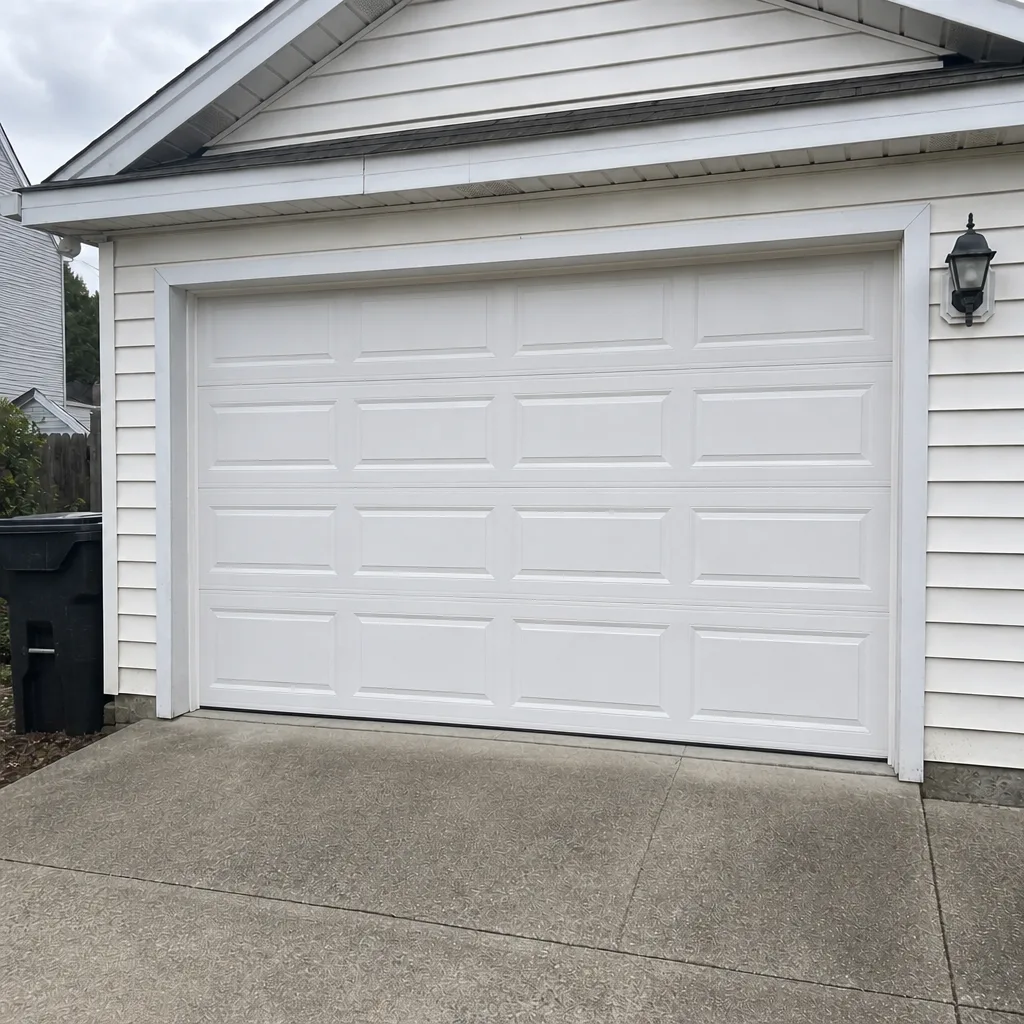
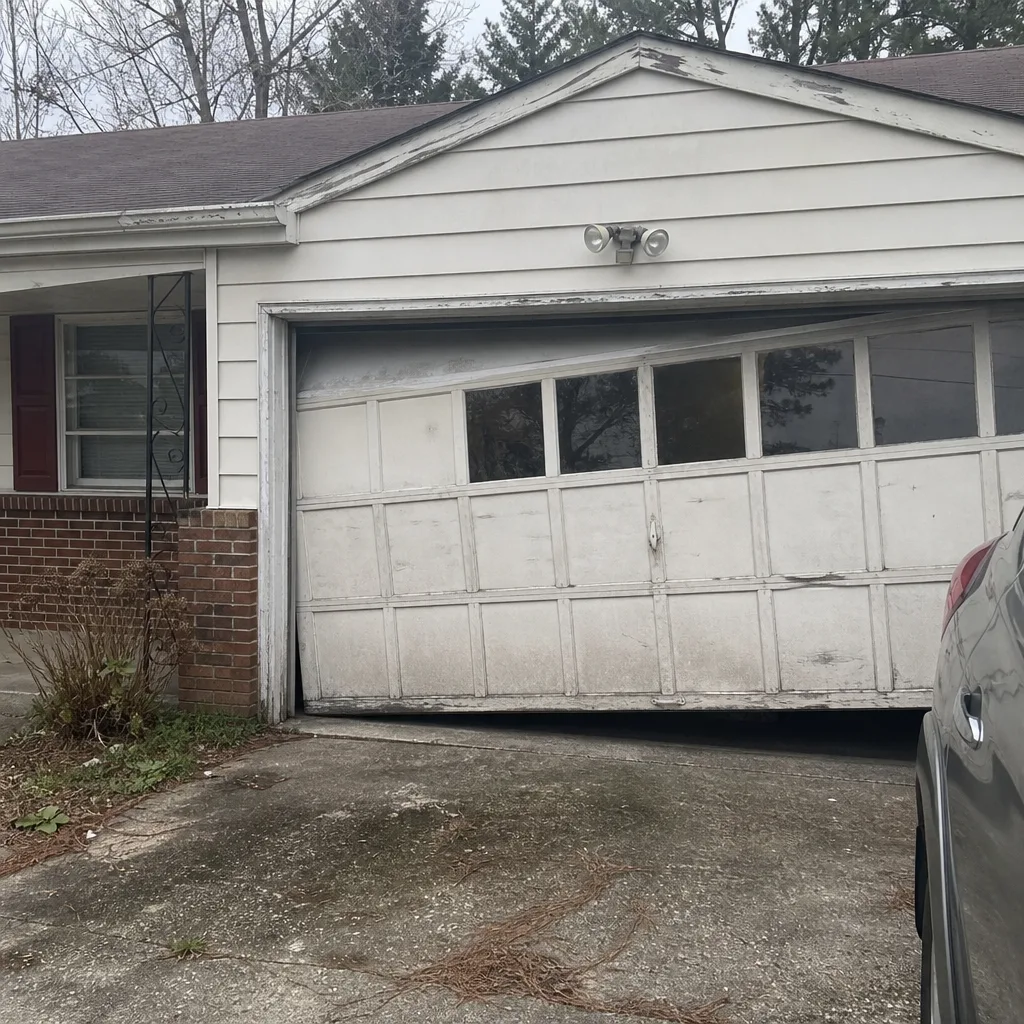
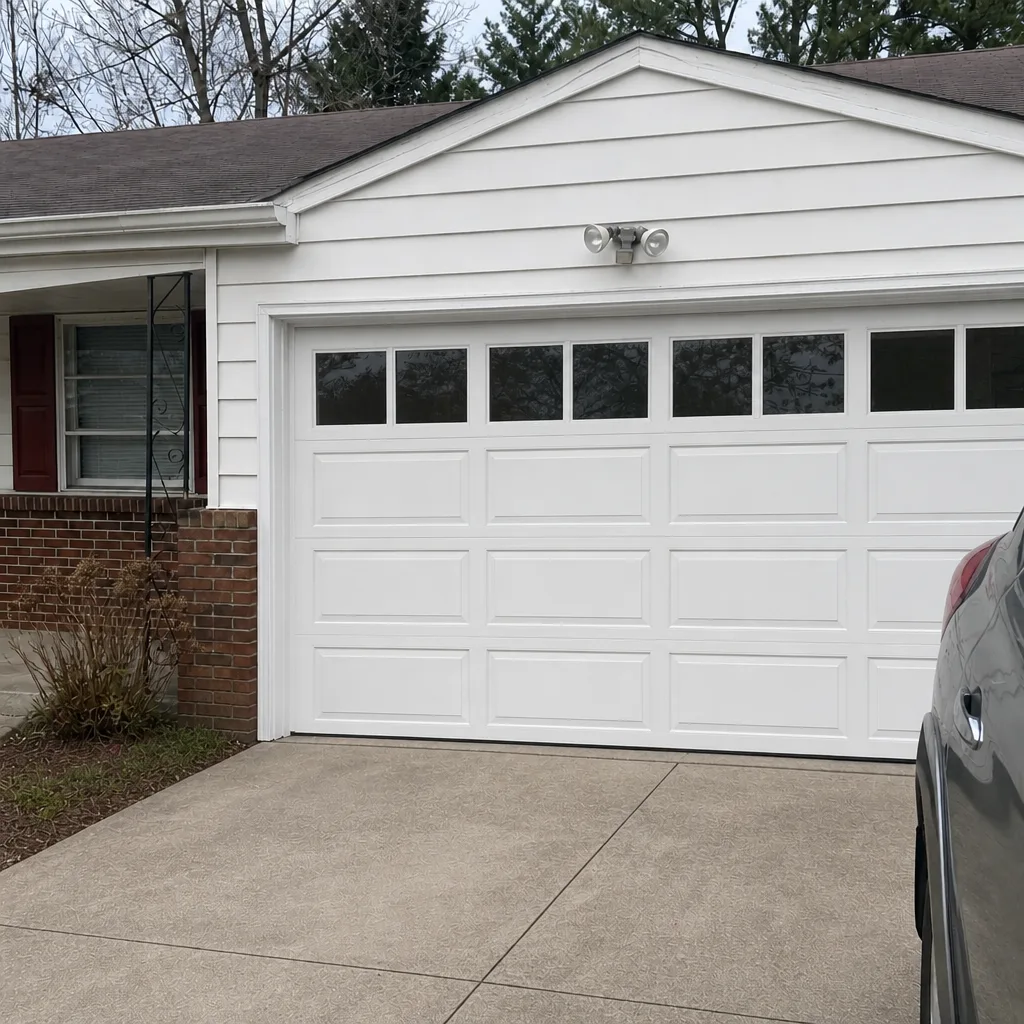
See the difference
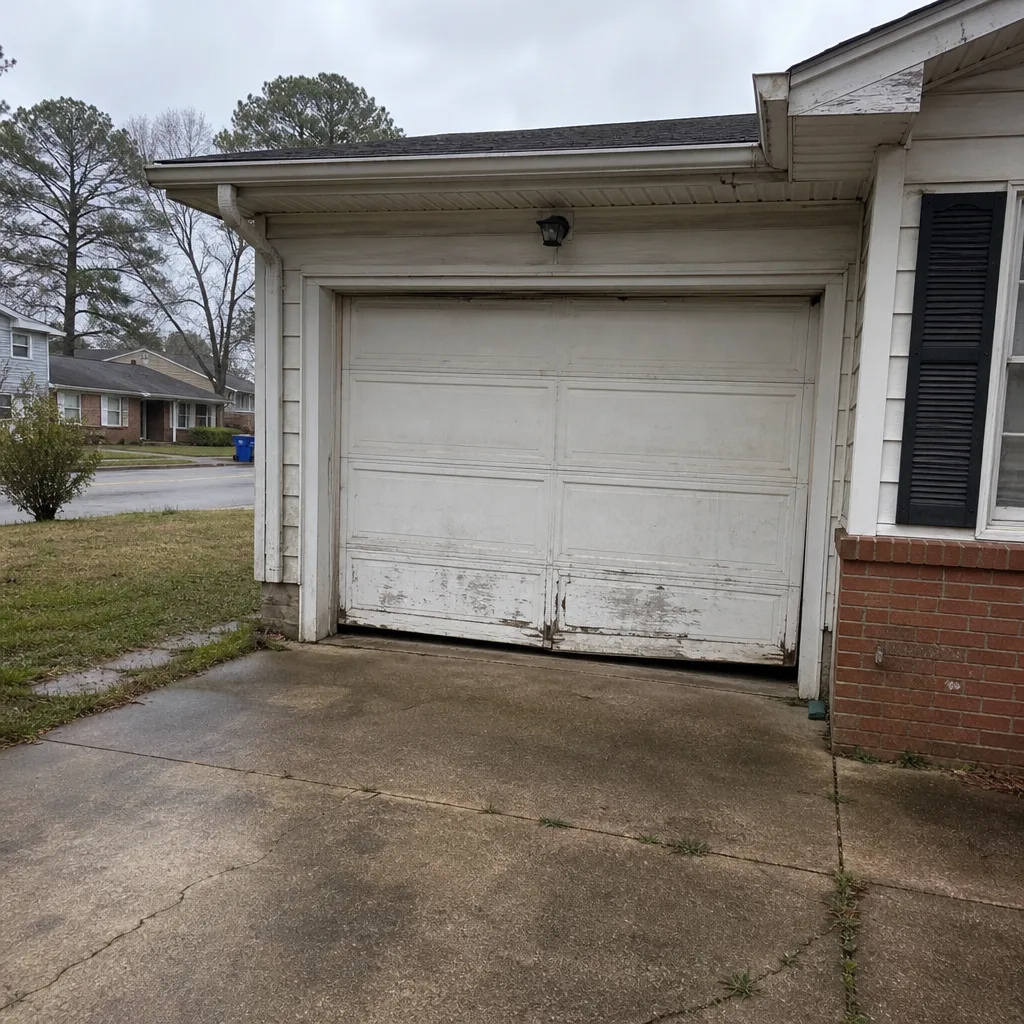 Before
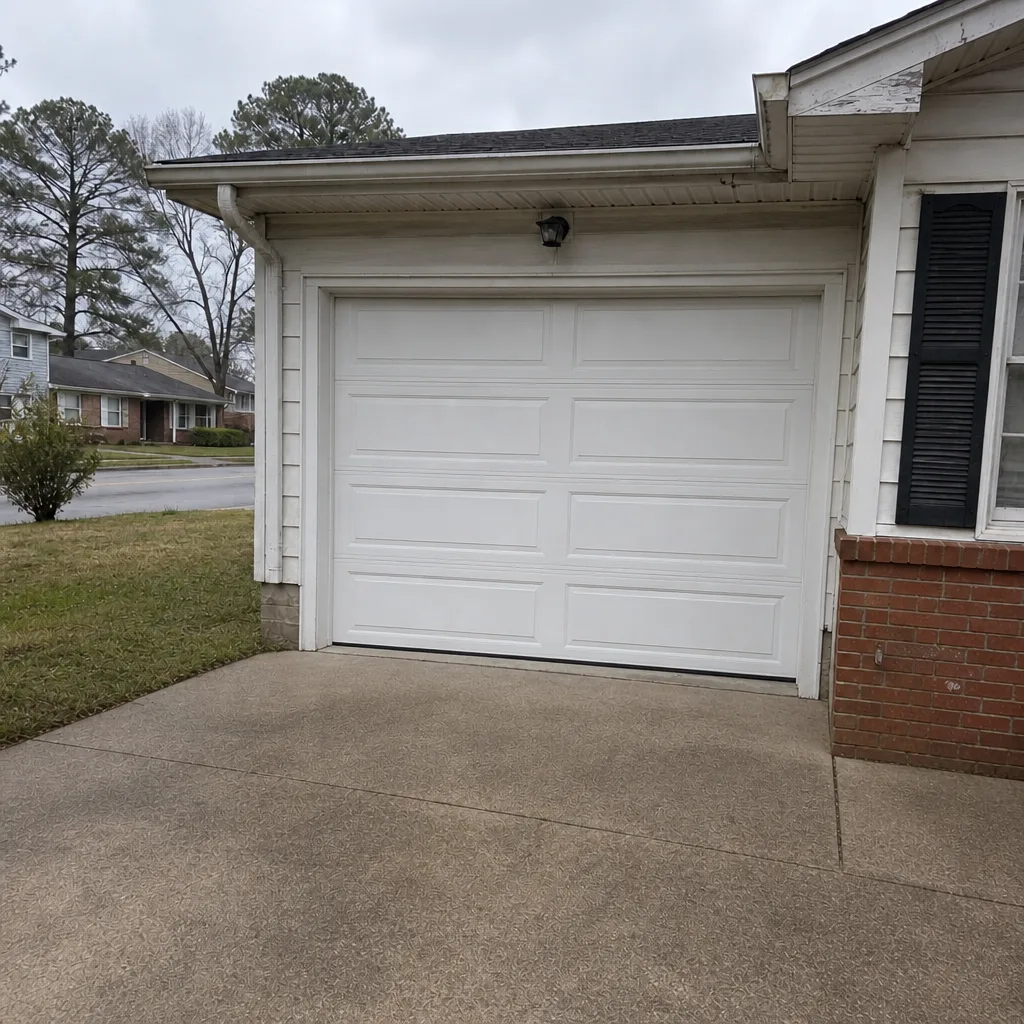 After
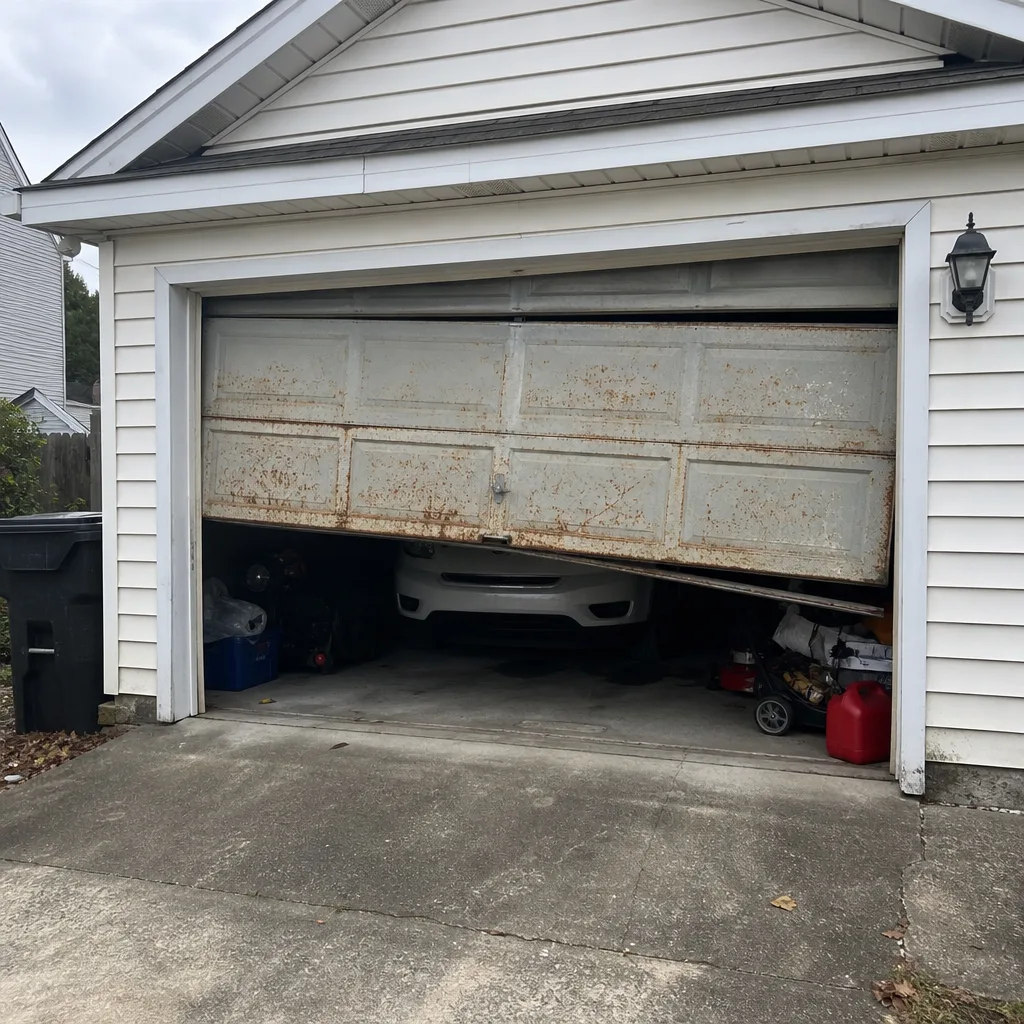 Before
 After
 Before
 After
When to Call a Professional
Some things are a quick fix. Others aren’t. Call us when a spring has snapped, a cable looks frayed or hangs slack, the door won’t open or close all the way, the door has come off one track, or you’ve heard the sharp bang of a spring failing. Those are safety issues as much as repair issues, and we run emergency garage door service for a door that’s stuck open or stuck closed. Call us, too, when the opener reverses for no reason, when the remotes only work sometimes, or when the door thumps and shudders as it travels. And call when you’re weighing repair versus replacement and want an honest read before a big purchase. Portsmouth Garage Door Repair Pros offers free estimates in Portsmouth – call (855) 937-1767 and we’ll give you a written number before any work starts. Our technicians have up to 15 years of experience across the major brands, and we work on the door you have.
Frequently Asked Questions
A well-sealed steel or aluminum door with regular hardware service can last well over a decade here, and longer if you keep the finish intact and the hardware lubricated. The hardware is the short-lived part; springs and cables age faster in our humidity than a national guide predicts. The door itself usually outlasts several sets of springs, which is why we treat spring replacement as normal maintenance rather than a reason to replace the door.
Twice a year for the hardware and a professional look annually is a reasonable starting point for most Portsmouth homes, and more often within a block or two of the water where the humidity is highest. The national schedules assume a dry climate, so they’re too generous here. A monthly listen and a quarterly lube catch most problems early.
Permit rules vary by project, so ask your city’s building department before ordering. A like-for-like replacement is often treated differently than a change in size or structure. We’ll quote and measure the door, and the permit question is one to settle with the city so there are no surprises on installation day.
Your price is quoted and agreed before any work starts, and the written estimate sets the final price. We size the job properly on the first visit rather than surprising you with an invoice bigger than the quote. If we find something the first look missed, you’ll hear it before we touch a tool, and you can decide.
We work on the door you have. We’re familiar with LiftMaster, Chamberlain, Genie, Clopay, Amarr, Wayne Dalton, Craftsman, and Raynor systems, and the recommendation follows what your door actually needs, not what we’d like to sell. If a repair makes sense, that’s the quote you get.
Keep people clear of the door, leave it where it is, and don’t try to force it by hand if a spring or cable is the cause. Call (855) 937-1767 for emergency garage door service. We’ll come out and get it moving, then give you a written estimate for the fix. Call for an exact quote – estimates are free.
The Bottom Line
Your garage door is a system, and in Portsmouth that system runs on a shorter clock than a national guide suggests. The right material, a matched opener, a tighter service interval for our humidity, and an honest repair-versus-replace call are the four decisions that protect your money and your door. Most of what we see here is a repair, not a replacement, and a scratch, a seal, or a seized roller is cheap to catch and costly to ignore. Get the door audited, keep the hardware lubricated, and call a professional before a spring or cable becomes a hazard. Portsmouth Garage Door Repair Pros connects you with vetted local professionals who work on the door you have. Call (855) 937-1767 for a free estimate in Portsmouth.
Written by the team at Portsmouth Garage Door Repair Pros.